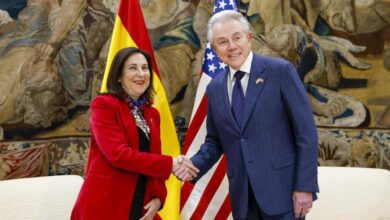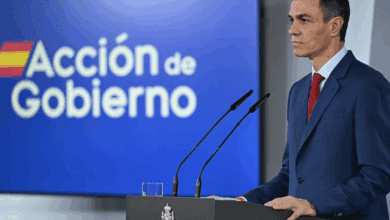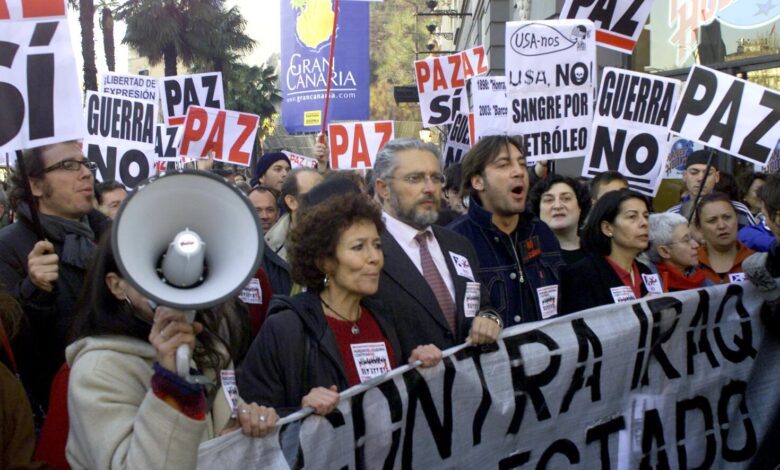
The Spanish government’s decision not to allow the US military to use the Rota and Morón bases for a possible attack on Iran has become one of the most talked-about events in recent days. This move provoked a sharp reaction from the US and reminded Spaniards of the events of 2003, when the country found itself at the center of mass protests against the war in Iraq. Back then, the slogan ‘No to war’ united millions of people, and today it is once again being voiced from the podiums, taking on new meaning against the backdrop of threats from the Donald Trump administration.
According to El Pais, the current conflict between Madrid and Washington is reminiscent of a time when support for the war was extremely unpopular among Spaniards. Polls showed that over 90% of the country’s population opposed military intervention in Iraq, and mass demonstrations became the largest in decades. Now, 23 years later, Pedro Sánchez’s government is once again using this historic slogan to highlight its stance and mobilize supporters.
Historical Parallels
In 2003, the slogan ‘No to war’ became a symbol of unity and protest against the policies of the then government. Today, Sánchez is relying on this same message to stand against not only external pressure but also domestic opponents. According to experts, this move could unite the left-wing electorate and serve as a reminder of the consequences of past decisions, when support for the US led to long-term problems for the country and the region.
However, as political analysts note, the current situation differs from events in the 2000s. Young people and new voters are more concerned with issues of identity and security than with anti-war slogans. Nevertheless, antipathy toward Trump and growing distrust toward the United States have markedly increased: according to Real Instituto Elcano, over the past year the share of Spaniards who consider America a threat has risen nearly fourfold.
Public and political response
Public debate has resumed over whether Spain’s participation in international military operations is justified. Many recall that support for the Iraq war was based on false information, and the consequences for the region were devastating. Now, as Madrid refuses to support military action against Iran, the government emphasizes its independence and its desire to avoid the mistakes of the past.
At the same time, the opposition criticizes Sanchez’s actions, accusing him of isolating the country and worsening relations with key partners. However, as El Pais notes, the ‘No to War’ slogan still deeply resonates with a significant part of society, especially among those who remember the mass protests at the start of the century.
International context
Spain’s decision has already prompted a response in Brussels. European authorities have declared their readiness to defend the interests of the country and the entire EU if the United States imposes trade restrictions. Details on the EU’s position can be found in the article about how Brussels backed Spain after Trump’s threats. This highlights that the conflict extends beyond bilateral relations and impacts the entire European security policy.
Experts note that Spain has always had a strong anti-war tradition. It was evident both in protests against joining NATO in 1986 and in the mass demonstrations against the war in Iraq. Today, despite changing political realities, pacifist sentiment remains a visible part of public life.
In recent years, Spain has repeatedly faced the dilemma of participating in international conflicts. Decisions to support or refuse military operations have always sparked heated debate and influenced domestic politics. The surge of protests against the Iraq war in 2003 became one of the largest in the country’s history, and choosing not to join new military campaigns is often seen as an attempt to avoid repeating past mistakes. Such situations show that questions of war and peace remain central to public attention and continue to shape the political agenda.