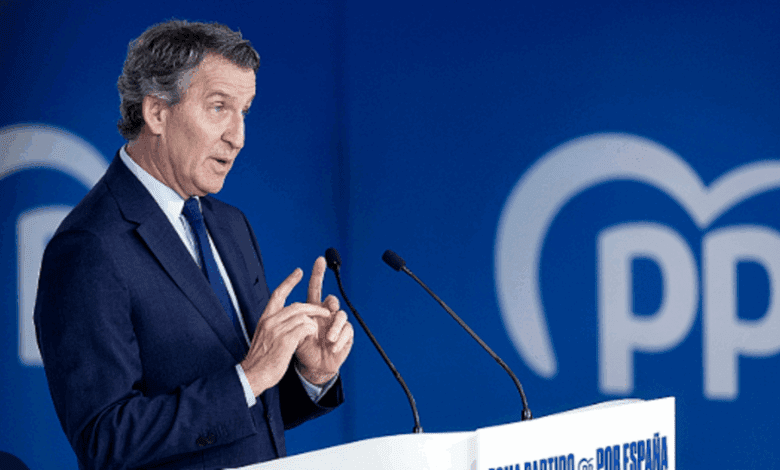
The political calm that followed the railway disaster in Adamuz proved short-lived. While experts continue to investigate the causes of the tragedy that claimed 42 lives, the opposition has ramped up pressure on the government. Members of the Partido Popular (PP) have made no secret of their frustration, arguing that the authorities are failing to handle the situation and acting chaotically, further fueling public anxiety.
On Wednesday, a press conference was held on Genova Street, home to the PP headquarters. The party’s deputy secretary for economic affairs, Juan Bravo, delivered a scathing critique of the government. According to him, the cabinet’s actions lack consistency, and the absence of clear information along with conflicting statements is only making matters worse. Bravo has sent an official letter to Transport Minister Óscar Puente, demanding clarification regarding the condition of the railway infrastructure. However, for now, the opposition is not demanding the minister’s resignation or insisting that he appear before parliament.
Accusations and Demands
The PP claims it has so far refrained from making public accusations in order not to interfere with the investigation or hinder rescue operations. However, the party now believes that further silence is impossible due to the lack of clear explanations from the government. The PP argues that decisions made after the tragedy may have compromised passenger safety—especially on sections where train speeds have been reduced, as well as on Rodalies lines in Catalonia.
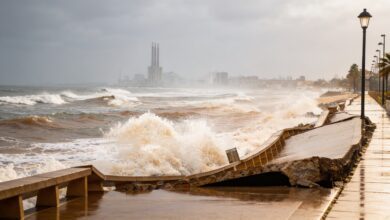
Bravo raised a valid question: if weather conditions in Catalonia made it unsafe to operate trains, why was service only suspended now? If the state of the tracks required a speed limit, why wasn’t that implemented earlier? According to the opposition, these questions remain unanswered, and the authorities’ actions appear delayed and unconvincing.
The transparency issue
Another pressing concern is the accusation of a lack of openness. PP representatives suggest the government is purposefully filtering information, including audio recordings of engineers’ communications, to control public perception. They argue that the transport minister is more focused on shaping the political narrative than on providing a complete account of the incident. The opposition believes public safety has taken a back seat.
Despite their tough rhetoric, the PP is not yet demanding the immediate resignation of Minister Puente. Party leaders cite moral reasons: as long as recovery teams are still removing bodies from the wrecked carriages, they do not want to fuel political infighting. However, hints at potential further steps are growing louder.
Domestic political pressure
Internal pressure is mounting within the party: many are demanding an end to the ‘political truce’ and a shift toward more decisive action. The decision to hold a press conference was made after yet another incident—a Rodalies line accident in Gelida (Gelida, Barcelona) and Adif’s subsequent move to impose speed restrictions on certain sections. Against this backdrop, the PP has gradually escalated its criticism, though it has yet to demand any official resignations.
By comparison, the Vox party has openly held the government responsible for the fatalities. Vox leader Santiago Abascal (Santiago Abascal) declared that ‘corruption kills,’ using strong language. In Madrid, the government of Isabel Díaz Ayuso (Isabel Díaz Ayuso) also echoed the accusations, stating that ‘chaos in railway management has already cost 42 lives.’
Prospects for dialogue
In this climate, the outlook for talks between the government and opposition appears uncertain. The PP leadership is in no hurry to confirm whether Alberto Núñez Feijóo (Alberto Núñez Feijóo) will attend meetings with Prime Minister Pedro Sánchez (Pedro Sánchez), even if discussions extend to international issues such as the situation in Ukraine. Party officials stress that as long as work continues to identify the victims of the tragedy, any attempt to shift focus to other topics is met with bewilderment.
The political pause that followed the Adamuz disaster is rapidly coming to an end. The public is demanding answers, while the opposition is increasingly accusing the government of incompetence and a lack of transparency. The authorities, in turn, have yet to provide comprehensive explanations, further fueling distrust and tension across the country.