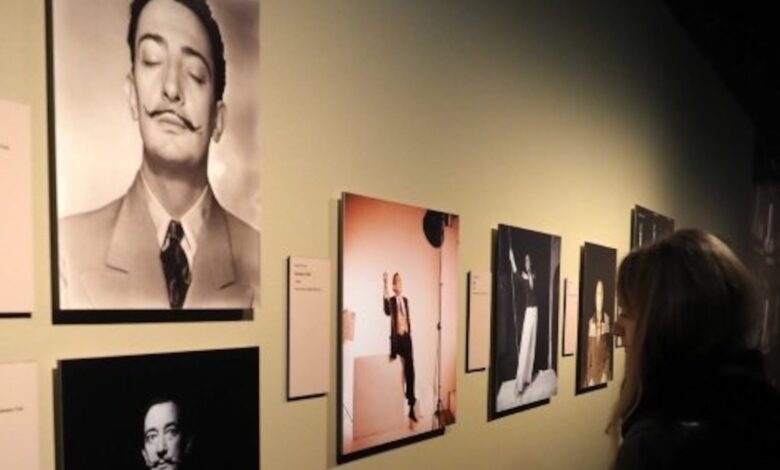
For Spaniards, the exhibition at Púbol Castle is more than just a cultural event—it’s a rare chance to discover the lesser-known aspects of Salvador Dalí’s life and that of his muse, Gala. The display, unveiled in the museum’s 30th anniversary year, highlights the intricate interplay of art, fashion, and personal relationships in the country’s history. New exhibits and restored items promise to reshape the familiar image of the famous couple and their circle.
The castle galleries now feature 27 unique items, including 17 photographs taken by German master Horst P. Horst. Three of these are enlarged contact sheets—one with Dalí, two with Gala. On display are also four original issues of Vogue, a copy of Town & Country, and the painting “Desmaterialización cerca de la nariz de Nerón” (1947). Particular attention is drawn to personal belongings: jewelry and three jackets that have never been shown to the public before and have been specially restored.
A history of collaboration
According to El Pais, the exhibition “Dalí/Horst. Miradas cruzadas” will run until January 2027. Jordi Mercader, head of the Fundació Gala-Salvador Dalí, notes that the display highlights both the artistic and human sides of the relationship between Dalí, Gala, and Horst. Their creative exchange began back in 1939 in New York, when Dalí was working on the “Sueño de Venus” pavilion for the World’s Fair and Horst was photographing sessions featuring the artist and his companion. Their collaboration continued for nearly two decades, with the last known portrait of Dalí by Horst dating to the 1960s.
Fashion played a significant role in these photo sessions. Gala would choose jackets by Arthur Falkenstein, while Dalí completed the look with unusual accessories—such as a pin depicting a cardinal or a Pierre Cardin tie with his embroidered surname. Their meticulous attention to detail highlighted their desire to control their own image, even when seen through another artist’s lens.
Fashion and Art
The exhibition features three garments: two of Gala’s jackets and a blue-and-white military-style blazer worn by Dalí in the 1950s. In one photograph, the couple pose on a rocky shore, presumably on the east coast of the United States. According to the organizers, this is one of the few outdoor shoots by Horst, who typically favored staged interior settings.
Among the exhibits, a photograph of Dalí with his eyes closed stands out—experts believe this shot alludes to the dream and subconscious themes that are central to surrealism. The exhibition also presents a 1947 painting where Dalí and Horst collaboratively created a scene with models floating in midair in dresses by Hattie Carnegie. For the first time, Gala’s portrait, retouched by Dalí himself with gouache and oil in 1957, is also on display.
Influence on Culture
According to the director of the Dalí museums, Montse Aguer, the new exhibition brings together Púbol’s key areas of work: photography, painting, and fashion. This approach offers a fresh perspective on Gala’s role as both a muse and an independent figure, as well as on Dalí’s contribution to the development of 20th-century visual culture. Experts note that interest in such projects is growing in Spain: more and more museums and galleries are exploring the intersection of different art forms and personal histories.
In recent years, Spain has seen a marked increase in exhibitions focusing not only on artists themselves, but also on their circles, fashion, and cultural influences. For instance, a new route in La Rioja was recently launched, linking wineries and historic fortresses, offering a new look at the region and its traditions — read more about this in the feature on unexpected stops along La Rioja’s wine route. Such initiatives highlight how Spain’s cultural heritage continues to evolve, revealing new meanings for contemporary society.
In recent years, Spain has regularly hosted exhibitions dedicated to creative partnerships and the influence of fashion on art. In Barcelona and Madrid, collections have been showcased more than once, revealing lesser-known aspects of famous artists’ lives and their circles. Such projects attract not only experts but also a broad audience, confirming the relevance of this topic for contemporary Spain. In the future, new exhibitions are expected to emerge, bringing together art, history, and the personal stories of well-known figures.