The memorial ceremony in Huelva became not only an act of remembrance but also a symbol of national unity following one of the most tragic train accidents in recent years. Hundreds of families, thousands of townspeople, and authorities gathered under one roof to bid farewell to the victims and express solidarity with one another. That evening, the attention of the entire country was focused on the events at the sports complex, where grief and support intertwined in a unified impulse.
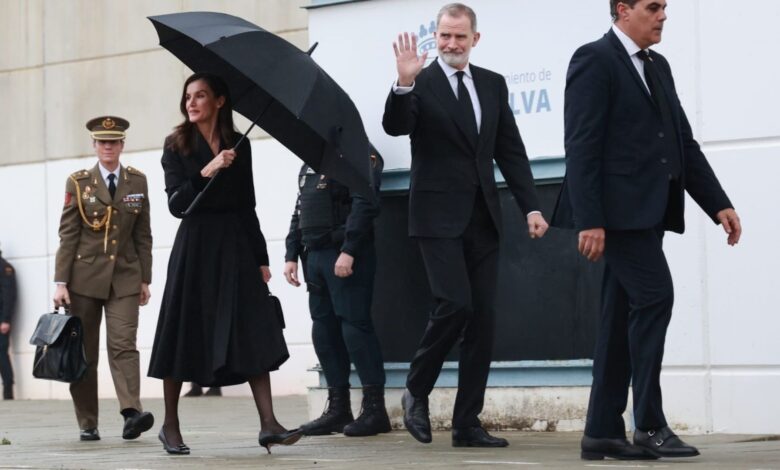
King Felipe VI and Queen Letizia arrived in Huelva under heavy rain, adding to the drama of the moment. Their presence stirred powerful emotions among those gathered: some shouted words of support, others could not hold back tears. Dressed in solemn mourning attire, the monarchs walked through the hall without hiding their feelings. As the King passed the altar, he crossed himself while the Queen bowed her head in respect. This gesture was noticed by all and sparked public discussion, as even in such moments, every detail of the royal family’s behavior draws close attention.
Symbols and rituals
The ceremony was held in an atmosphere of deep respect and mourning. An image of the Virgen de la Cinta, the city’s patroness, and the famous ivory cross were placed on the altar. The renowned choral chapel provided musical accompaniment, lending the service a special solemnity. Prayers and words of comfort sounded not only for the families of the victims but for everyone who felt part of this tragedy.
Among those present were not only ordinary citizens, but also key figures from the country’s political sphere. In the absence of the Prime Minister, the government was represented by the Deputy Prime Minister and ministers, as well as opposition leaders and regional heads. This show of unity in the face of tragedy became a rare example of how personal and political disagreements fade into the background when confronted with national grief.
Public response
The widespread support and participation in the ceremony showed how deeply the incident affected Spanish society. People traveled from different regions to express their condolences and support the victims’ families. On social media and in the streets, people discussed not only the catastrophe itself, but also how the country responds to such challenges. Many noted that it is precisely these moments that shape national identity and strengthen the sense of community.
Alongside the ceremony in Huelva, another memorial service took place in Madrid, underlining the scale of the tragedy and its impact across the country. On this day, Spain seemed to come to a standstill, honoring the memory of those lost and expressing hope that such events will never happen again.
Looking ahead
The tragedy in Adamuz has sparked a discussion not only about railway safety, but also about the role of the state in supporting those affected. Many expect that such a large-scale disaster will lead to reforms and changes in the transport safety system. Yet, for now, the main focus is remembering the victims and supporting their loved ones.
The authorities have promised to provide all necessary assistance to the families of the victims, while public organizations have already begun raising funds and arranging psychological support. In times like these, it’s clear that Spanish society can unite in the face of tragedy, despite political and social differences.
King Felipe VI has been on the throne since 2014 and has repeatedly become a symbol of national unity during challenging periods. His participation in mourning ceremonies always resonates widely, and his personal gestures and words of support strike a chord with millions of Spaniards. Queen Letizia, a former journalist, is also known for her empathy and attention to detail, making her one of the most popular figures in modern Spain. Their joint appearances at such events are seen as a sign of support and hope for the whole country.