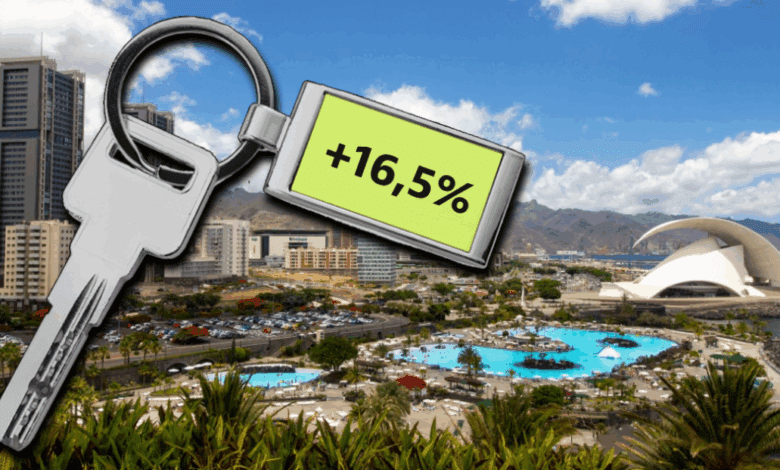
In October 2025, Santa Cruz de Tenerife once again found itself in the spotlight of real estate market analysts. The average price per square meter in the city reached €2,498, up 16.5% from a year earlier. This twelve-month increase significantly outpaces the national average, although the absolute price is still slightly below the Spanish mean. Nevertheless, the market dynamics in the Tenerife capital raise questions even among seasoned experts: what is driving prices up and which neighborhoods are becoming new hotspots?
Compared to September, housing prices in Santa Cruz rose by 1.1%. Over the quarter, the increase was 0.5%. However, it was the annual jump that set the record: nationally, the average growth reached 15.7%, while here it stood at 16.5%. In absolute terms, Spain still leads (€2,555/m²), but in terms of growth rate, Santa Cruz is confidently taking the lead.
Where is housing most expensive? Unexpected champions
The most expensive area in the city remains Los Hoteles – Rambla – Duggi, where a square meter now costs €3,535 and prices have surged by 18.2% over the year. Next comes La Salle at €3,205/m² (+12.3%). The city center holds steady at €2,997/m², but growth here is minimal—just 0.9%. Despite its prestige, Toscal has actually seen a slight price decline (–0.7%). Salamanca – Uruguay, by contrast, added 12.7% to reach €2,534/m².
This difference in dynamics is explained not only by demand, but also by the structure of supply. Prestigious districts have a saturated market, while in new and peripheral areas, demand is just beginning to form, leading to sharp price increases.
The most affordable — and fastest-growing — neighborhoods
Paradoxically, it is the cheapest neighborhoods of Santa Cruz de Tenerife that are showing record growth rates. In Santa Cruz Suroeste, housing costs €1,804/m², but prices have soared by 21.8% over the past year. Ofra – Costa Sur is experiencing a similar trend: €1,843/m² and up 24.8% in twelve months. These areas were traditionally considered affordable, but they are now becoming increasingly attractive to investors and young families.
The reasons behind this growth lie in the changing demand structure. Overcrowding in central districts, rising prices in prestigious areas, and limited supply are pushing buyers to seek alternatives on the outskirts. As a result, previously overlooked neighborhoods are becoming new growth hotspots.
Market trends: the real estate boom in Santa Cruz de Tenerife shows no sign of slowing down
Overall, the housing market in Santa Cruz de Tenerife is showing a steady upward trend in nearly all districts. Even where growth appears modest, demand remains high. As buyers shift focus to the outskirts, price disparities across the city are evening out. The boundaries between ‘expensive’ and ‘affordable’ neighborhoods are gradually fading.
Experts note that the situation is unlikely to change in the coming months. High demand, limited supply, and the city’s appeal for new residents are keeping prices at elevated levels. This is especially noticeable in areas that, until recently, were considered budget-friendly.
By the way, who sets the trends: a few words about Idealista
Incidentally, Idealista is the largest online real estate portal in Spain, founded in 2000. The company has become a true benchmark for home buyers, sellers, and renters across the country. Every month, millions of users look for apartments, houses, and commercial properties on the site. Idealista not only aggregates listings, but also regularly publishes analytical reports that are used by both individuals and real estate professionals. Thanks to its extensive database and in-house research, the portal is considered one of the most authoritative sources of information on real estate prices and trends in Spain. In recent years, Idealista has been actively expanding, introducing new services and technologies to enhance user experience.
Spain’s Housing Market: A Broader Perspective
As previously reported by RUSSPAIN.COM, in October 2025, record-high square meter prices were also recorded in Alicante. There, prices almost matched the national average, and in certain areas, annual growth exceeded 20%. Analysts attribute this to high demand for seaside properties and ongoing migration to coastal cities. For more details about the situation in Alicante, read our feature.