The discovery of a meticulously concealed underground tunnel in Ceuta has become one of the most significant events in Spain’s fight against drug trafficking in recent years. As a result of a large-scale operation, police not only shut down one of the largest hashish transport networks but also uncovered new methods used by criminal organizations to bypass border controls. This finding is already influencing law enforcement strategy and may lead to tighter security measures along key routes.
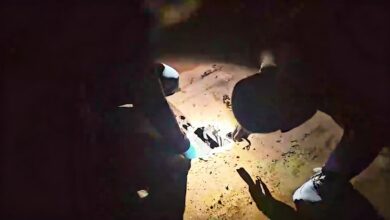
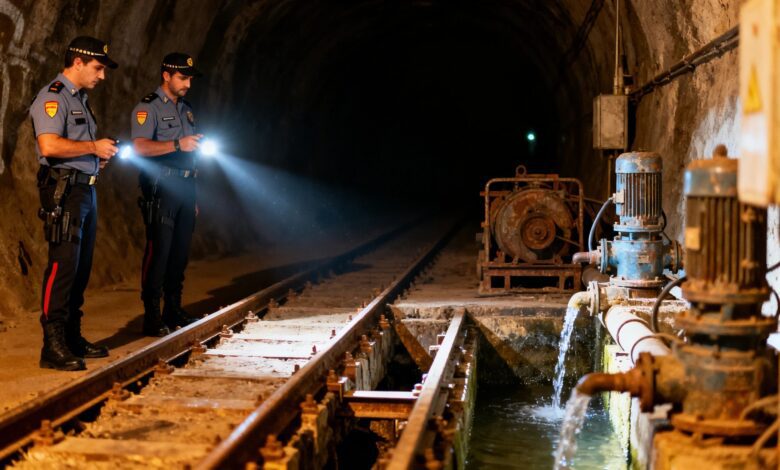
The tunnel, measuring 19 meters in length, was found beneath a warehouse in the industrial zone of El Tarajal, just a hundred meters from a similar structure uncovered earlier. According to RUSSPAIN, the infrastructure included not only rails and trolleys, but also an advanced soundproofing system, which allowed for the discreet movement of large amounts of hashish. Investigators determined that the tunnel ceased operations last summer; however, its technical sophistication and level of concealment have impressed even seasoned experts.
Arrests and operation details
During the operation, which began back in February 2025, 27 people were detained, including both organizers and direct participants. One of the network leaders managed the operation from Morocco, while another was in Ceuta, overseeing shipments and making deals. Police report that these individuals were responsible for setting up and operating both discovered tunnels. Investigators seized more than 17 tons of hashish, €1.43 million in cash, 66 communication devices, and 15 premium-class vehicles.
Special attention was paid to transportation methods: the criminals used both heavy trucks and high-speed boats to deliver goods to mainland Spain and further into Europe. In June, a truck carrying 15 tons of hashish was stopped in Almería. Later in the summer, it emerged that part of the shipment was being sent to Galicia after they lost control of the southern route. In November, another load—480 kilograms of hashish—was intercepted in a van in the Málaga area.
Technology and camouflage methods
To ensure security and concealment of the tunnel, the criminals used modern technical solutions. The entire structure was divided into three levels: a shaft, an intermediate storage chamber, and a final section leading to the Morocco border. A system of rails, trolleys, lifting mechanisms, and even powerful pumps for draining water allowed the tunnel to operate in any conditions. The entrance was hidden behind large refrigeration equipment, and the infrastructure was carefully insulated from noise.
Police used not only traditional methods for the investigation but also advanced technologies, including underground drones and specialized units. According to experts, setting up such an operation requires significant investment and engineering knowledge, indicating a high level of preparation by the criminal group.
Consequences and new challenges
Uncovering this scheme has raised major concerns among Spanish law enforcement. According to UDYCO officials, this is the largest hashish distribution network ever detected in the country. The operation spanned several regions, with searches and arrests carried out in Ceuta, Marbella, Villablanca (Huelva), Los Barrios (Cádiz), and Pontevedra. During the final stage, authorities seized another 228 kilograms of hashish and 88 kilograms of cocaine.
Authorities note that such tunnels pose a serious threat to national security and call for a review of border control strategies. The use of complex engineering solutions and modern technology makes countering these schemes increasingly difficult. According to police, the investigation is ongoing and the number of arrests could rise.
In recent years, Spain has faced a rise in attempts to smuggle drugs across the border with Morocco. In just the past two years, two underground tunnels have been discovered in Ceuta, highlighting the increasing ingenuity of criminal groups. Similar schemes have been documented in other regions of the country, but such large-scale and technically sophisticated facilities are extremely rare. According to russpain.com, these discoveries could lead to tighter controls and the introduction of new technologies to detect hidden routes.