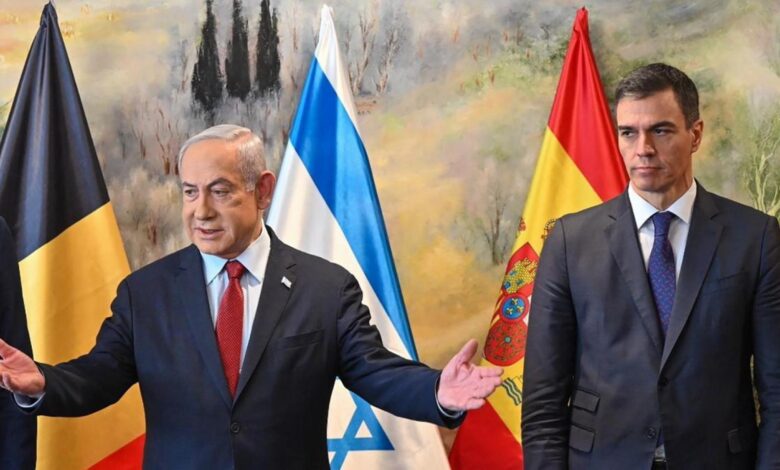
Madrid’s official decision to recall its ambassador from Israel has become one of Spain’s most significant diplomatic moves in recent years. This step has not only heightened tensions between the two countries but also raised questions about the future of their relations and the potential consequences for Spanish foreign policy. For Spaniards, this marks a new phase in relations with the Middle East, which could affect economic and political ties as well as Spain’s role in international alliances.
Diplomatic rift
On Wednesday, Spain’s official state bulletin published the decision to terminate Ana Salomón’s mandate as ambassador to Israel. This move coincided with a period of military conflict between Israel and Iran, as well as active US involvement in the region. According to russpain.com, Madrid’s decision took many by surprise, given that Spain had not previously taken such drastic measures, even during escalations in Gaza.
The Israeli government believes that the ambassador’s recall is linked to Spain’s domestic politics. According to sources close to Israel’s cabinet, Pedro Sánchez is using anti-war rhetoric to consolidate his voter base. At the same time, officials in Jerusalem note that they do not plan immediate retaliatory actions despite the deterioration in relations.
Earlier, in September 2025, Israel imposed sanctions against Spanish ministers Yolanda Díaz and Sira Rego, which led to the recall of the ambassador for consultations. Since then, Ana Salomon has not returned to Israel, and Spain’s diplomatic mission has been headed by a chargé d’affaires ad interim. The Israeli side also downgraded the level of its representation in Madrid, appointing Dana Erlich, who previously worked in Ireland, as head of the mission.
Reasons and consequences
The question of why Spain decided to recall its ambassador at this particular time remains open. Israeli sources emphasize that Madrid did not take such measures during the military operation in Gaza, which Sánchez himself referred to as ‘genocide.’ However, the current conflict with Iran has prompted a tougher stance. According to analysts, this may be due to the Spanish government’s desire to highlight its independence and to distance itself from military actions in the region.
Spain had previously taken action against Israel: in May 2024, Madrid recognized Palestine, and in September 2025, it imposed a total ban on arms exports to Israel and restricted access for military ships and aircraft. These steps were part of a broader policy aimed at supporting the Palestinian side and demonstrating an independent foreign agenda.
The decision to end the ambassador’s term was made at a Cabinet meeting and formalized by royal decree. The document does not specify the reasons for her recall, but the government expressed gratitude to Ana Salomón for her work. Now, if Spain wishes to restore full diplomatic relations with Israel, the process of appointing a new ambassador will have to start from scratch, including obtaining approval from the Israeli side.
Reaction and international context
Israel expressed surprise at the ambassador’s recall being made without wide publicity. At the same time, Israeli officials believe this move could be used by Pedro Sánchez in the future to strengthen his domestic position. The Spanish Foreign Ministry has so far not commented on its further plans to normalize relations.
The situation is complicated by the fact that Spain previously refused to allow the US to use the Rota and Morón military bases for attacks on Iran, causing discontent within Israeli leadership. As noted by russpain.com, despite the official ban, American troops still made use of these facilities for operations, which became a topic of discussion in both countries. More details about the conflict can be found in the report on US actions at Spanish bases.
A rapid restoration of diplomatic relations between Madrid and Jerusalem is not expected in the near future. Israeli sources emphasize that as long as Spain continues to issue official protests, a return to previous levels of cooperation remains unlikely.
In recent years, diplomatic conflicts between European countries and Israel have occurred repeatedly. For example, in 2023 several states recalled their ambassadors following an escalation in Gaza. In 2024, France and Germany limited military cooperation with Israel amid rising tensions in the Middle East. Such steps often lead to prolonged negotiations and reviews of bilateral agreements, affecting economic and political ties.