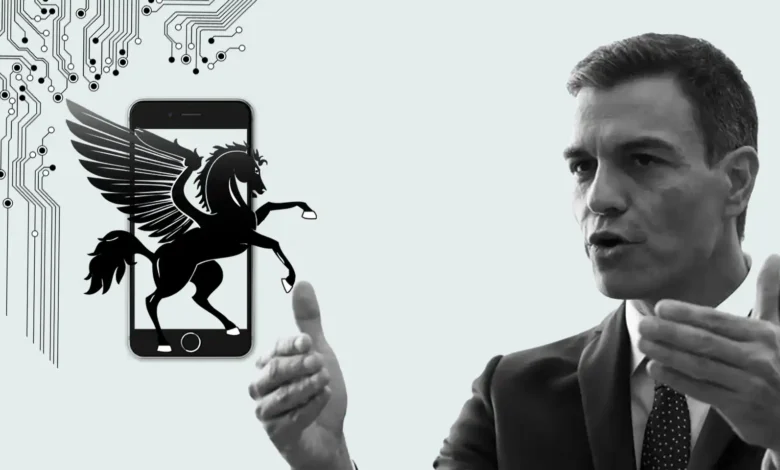
In Spain, the high-profile case of government officials’ phones being hacked has once again hit a dead end. Judge José Luis Calama of the National Court has announced the suspension of the investigation into the use of the Pegasus spyware against Pedro Sánchez and several ministers. The reason: a complete lack of cooperation from Israel, where the controversial program was developed.
All attempts by Spanish authorities to obtain any information from Israeli agencies and Pegasus developer NSO Group have failed. Israeli officials simply ignore international requests, and company representatives remain unreachable. As a result, Judge Calama has openly admitted: without Israel’s cooperation, it is impossible to determine who orchestrated the attack on top government officials.
Investigators trace the trail to Morocco
New details came to light after French law enforcement shared their findings. It turned out that similar Pegasus attacks had been documented in France as well—among the victims were journalists, politicians, and even government officials. What’s more, the email address used in the attack on Spanish officials matched one that had appeared in surveillance cases involving French activists and diplomats.
All evidence points to Morocco as the likely orchestrator of the cyberespionage. However, without official confirmation and access to NSO Group data, the allegations remain mere speculation. The Spanish court is left in a situation where there is a suspect but no evidence or way to obtain it.
Israeli wall of silence
Judge Calama does not hide his frustration: all attempts to get answers from Israel have met a deafening silence. Requests to question NSO Group executives, obtain technical data, and details about how Pegasus operates have gone unanswered. The Israeli authorities not only failed to assist but effectively blocked the investigation by ignoring every international request.
In his ruling, Calama points out that the inability to identify the actual perpetrators of the crime forces him to close the case. In legal terms, this is called an ‘impotence of investigation’—when the inquiry stalls due to external obstacles rather than lack of evidence.
Second dead end in two years
This is the second time Spanish justice has been forced to halt the Pegasus probe. The case was first closed in summer 2023, but was reopened after new evidence surfaced from France. Yet even fresh information failed to move the investigation forward—without cooperation from Israel, the inquiry proved powerless.
The judge notes that if Israel ever decides to cooperate or new evidence emerges, the case can be reopened. For now, the investigation is on hold and those responsible remain unknown. Spanish society and politicians are left wondering: how can the state be protected if even international mechanisms fail?
Questions without answers
The Pegasus affair has become a real challenge for Spain’s judicial system. Foreign interference, a lack of transparency, and Israel’s reluctance to cooperate have set a dangerous precedent. If the case involving the hacking of the prime minister’s and ministers’ phones can’t be resolved, what does that mean for the safety of ordinary citizens?
While judges shrug and politicians demand answers, all that remains is to wait: will Israel’s stance change and will new evidence appear? For now, the biggest cyber-espionage case in Spain’s history remains unsolved and those involved go unpunished.