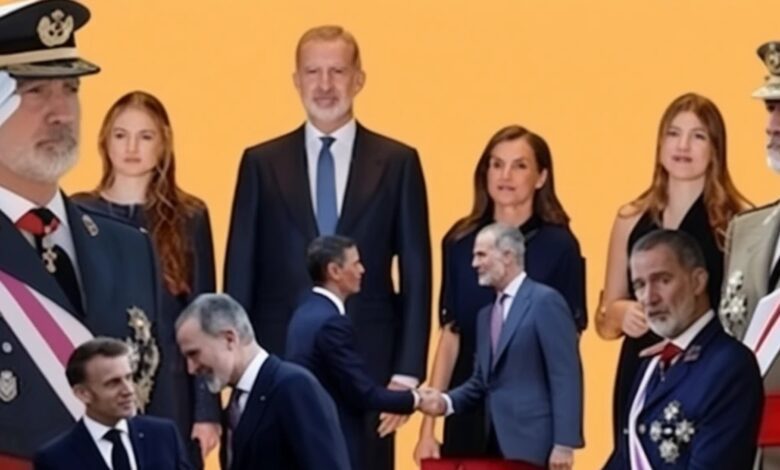
In Spain, the discussion is not just about another royal birthday, but about an entire era of change symbolized by Felipe VI. His 58th birthday has become an occasion to reflect on how the royal family and society’s attitude toward the monarchy itself have evolved. For many Spaniards, these changes are highly relevant: the country’s stability and Spain’s image on the international stage depend directly on public confidence in the institution.
A new dynasty
Felipe VI, who became king after the abdication of Juan Carlos I, has found himself in the spotlight not only due to his age but also thanks to his renewal strategy. Together with Queen Letizia, he reduced the family core to a minimum: just the couple, their two daughters, and his emeritus parents. This model is one of the most compact among European monarchies. Yet behind this apparent simplicity lies a complex struggle for public trust.
Scandals involving the former king and high-profile investigations forced Felipe VI to distance himself from the past. His father went into exile, and the family itself became a symbol of transformation. Spaniards saw this not just as an attempt to rescue the monarchy’s reputation, but as a genuine move toward transparency and renewal.
Work and approval ratings
In 2025, Felipe VI and Letizia became Europe’s most active royals by the number of official engagements. The King spent 192 days in the public eye, surpassing even his own figures from the previous year. He is followed by the monarchs of Monaco, Norway, Belgium, and other countries. Letizia was also among the leading European queens in this regard.
Public opinion reflects these efforts. Almost 44% of Spaniards approve of Felipe VI’s work, and more than 60% believe that Princess Leonor is capable of becoming a worthy head of state. Even among republicans, most acknowledge that the current king has improved the monarchy’s image compared to the previous generation.
A strategy of change
Experts note that Felipe VI built his reputation by contrasting himself with his father. While the monarchy was once associated with charisma and secrecy, the current focus is on transparency and ethics. The king has given up easy popularity for the sake of principles, which has helped strengthen trust in the institution.
Queen Letizia has also played a key role. Unlike the traditional role of a monarch’s spouse, she shows independence and actively participates in the country’s affairs. Her stance is seen as a symbol of modernity and professionalism, helping the king appear more relatable to the public and relevant to new generations.
Family values
Felipe VI’s attitude towards his mother, Queen Sofía, draws particular attention. His support during difficult times, such as the publication of Juan Carlos’s memoirs or the death of Princess Irene, is perceived as a sign of respect for traditions and family values. This brings the monarch closer to ordinary Spaniards, for whom family is a vital part of their identity.
Sofía remains one of the most respected figures in the family, symbolizing stability and continuity. Her presence helps maintain balance between the past and the future and supports the image of a unified and cohesive dynasty.
Connection with society
Felipe VI and Letizia do not limit themselves to official receptions. Their visits to regions affected by natural disasters or tragedies, such as the accident in Adamuz, are seen as genuine involvement in the life of the country. These gestures form the image of monarchs who are not detached from the people, but who share their joys and sorrows.
In recent years, the palace has become more active in working with young people. Their appearance on social media, though somewhat delayed, has been an attempt to establish a dialogue with the new generation. Felipe VI deliberately maintains a classic style, passing on emotional connection and modern language to his daughter Leonor. His goal is to be a support, not an idol, for the youth.
The future of the monarchy
Spain is watching as a new queen is being shaped. Leonor is increasingly present at official events, and her independence and confidence are becoming an example for her peers. She is not just a representative of the future – she is already part of the generation that will have to decide the fate of the country.
By giving his daughter and younger Sofia more space, Felipe VI is showing his willingness to embrace change and his lack of fear about competition within the family. This approach is seen as a sign of maturity and foresight, not weakness. For Spaniards, it signals that the monarchy is ready to evolve and remain relevant.