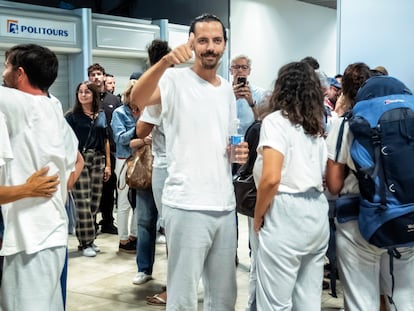
In the evening, a plane landed in Madrid carrying the deputy from Valencia, Juan Bordera. His return became possible after spending several days in an Israeli prison. He was detained for participating in an international flotilla headed to the shores of Gaza on a humanitarian mission.
Bordera was not alone in the detention center—a small cell of about twenty square meters held thirteen more people. According to him, conditions were extremely harsh: constant psychological pressure, physical abuse, lack of clean drinking water, and expired food. Some detainees went on a hunger strike, and their situation was of serious concern, especially due to the water quality and lack of medical care.
According to the deputy, the Spanish consular service tried to help, but it was not enough. Bordera himself did not receive support from Spanish diplomats, but was able to rely on assistance from Palestinian lawyers. He emphasizes that the activity of civic movements is what can bring change, citing as examples the strike in Italy that forced authorities to send a support vessel, and Turkey’s actions to protect the flotilla with drones.
After his release, Bordera experiences mixed feelings: joy at returning home and anxiety for those who remain in detention. He recalls how guards threatened them with weapons, used service dogs, and provided food and water that were unfit for consumption. He suffered a rib injury, while his companions endured more serious harm. The psychological pressure was especially severe: detainees were deprived of sleep, humiliated, denied medical care, even to elderly diabetics.
The deputy believes that European governments should respond more decisively to Israel’s actions. He points out that the Italian authorities were the first to evacuate their citizens, while the Spanish were among the last. Bordera is convinced that, if necessary, he would take part in a similar mission again, as he believes only constant public pressure can change the situation. He warns that Israel’s violation of international law could set a dangerous precedent for the entire world.
In his opinion, the reported casualty numbers in Gaza are severely underestimated, and establishing a permanent humanitarian corridor is a task for governments, not ordinary citizens. Bordera stresses that activists should not have to risk their lives to deliver aid, and that the international community must take responsibility for ensuring safety and access to humanitarian support.
Recalling the events of his detention, the deputy notes that the Israeli army acted with restraint only while under the eye of the cameras, but once video surveillance was turned off, the beatings and humiliations began. He wonders: if this is how well-known politicians and activists are treated, what must be happening to ordinary Palestinians? Bordera calls for a boycott of Israel, following the example of South Africa’s international isolation during apartheid, and believes that, in time, the scale of the tragedy will become clear to the whole world.