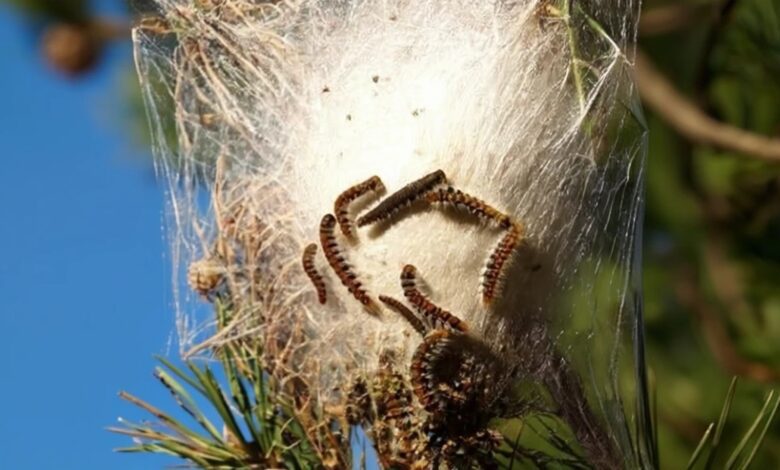
This year, dog owners in Alicante are facing an unexpected threat: the seasonal activity of processionary caterpillars has started earlier than usual, leading to a sharp increase in the number of affected animals. Veterinary clinics in the city and coastal areas are already treating dogs with severe injuries after contact with these caterpillars. The situation is causing concern among experts, as the consequences for pets can be extremely serious—from inflammation of the mucous membranes to life-threatening complications.
Early start to the season
In recent weeks, a mass appearance of the caterpillar Thaumetopoea pityocampa, known as the pine processionary, has been observed in various parts of the province. Typically, its activity peaks in the early months of the year, but this time, everything started noticeably sooner. Veterinarians report that dozens of cases have already been recorded where dogs, after walks in pine groves, returned showing signs of severe intoxication. Animals that roam off-leash or without a muzzle near infested trees are especially at risk.
The processionary is dangerous not only because of its appearance—its body is covered in microscopic hairs that trigger severe allergic reactions. When these hairs come into contact with skin or mucous membranes, or are ingested, dogs can develop tongue swelling, ulcers, vomiting, itching, and in severe cases—tissue necrosis and breathing difficulties. Veterinarians emphasize: the sooner help is provided, the higher the chances of recovery.
Expert recommendations
In response to the surge in cases, Alicante’s veterinary community has launched an information campaign. Dog owners are advised to closely monitor their pets’ behavior during walks, avoid areas with pine trees where processionary caterpillars have been seen, and to use leashes and muzzles. If a dog comes into contact with a processionary caterpillar, immediately rinse the affected areas (mouth, lips, tongue, muzzle, and paws) with a baking soda solution or clean water—do not rub—and seek veterinary help urgently. It’s also important to protect your own hands and face to avoid injury.
Veterinarians also remind their colleagues to consider processionary caterpillars as a factor when diagnosing any suspicious symptoms in animals, especially if they have recently been in wooded areas. All cases should be recorded to track the spread of outbreaks and respond promptly to new incidents.
How the threat develops
The processionary caterpillar’s life cycle in Alicante begins in autumn, when females lay eggs on young pine shoots. Larvae appear in October and November, feed actively, and by December form dense silk ‘nests’ to shelter from the cold. As January or February arrives—or already by late January this year—the caterpillars descend en masse to the ground in long lines, burrowing into the soil to pupate. It is during this period that the risk to dogs is highest: caterpillars easily end up on trails and lawns where pets walk.
A distinctive trait of the processionary caterpillar is its habit of moving in a line, making them highly visible but no less dangerous. Even brief contact with their hairs can provoke a severe reaction in dogs. Veterinarians note that, in recent years, due to mild winters and climate change, the caterpillar’s active season has become increasingly unpredictable.
Consequences for the region
Processionary outbreaks in Alicante are not new, but this year stands out for its early onset and higher number of affected animals. Last season, similar cases were recorded in Valencia and Murcia, where an unusually warm winter was also noted. In some areas, local authorities even organized special treatments for pine groves to reduce the risk for pets and people.
In recent years, Spain has debated the need to review control measures for processionary caterpillars, including biological methods and public awareness efforts. Veterinarians emphasize that only timely action and prevention can help avoid tragic consequences for pets.
In other regions of the country, such as Catalonia and Andalusia, cases of mass dog poisoning and even isolated incidents involving children who accidentally came into contact with the caterpillars have also been reported. In 2024, similar outbreaks were recorded in Malaga and the Balearic Islands, confirming the trend of the processionary’s expanding range. Veterinary services continue to monitor the situation and urge pet owners to be especially vigilant in the coming weeks.