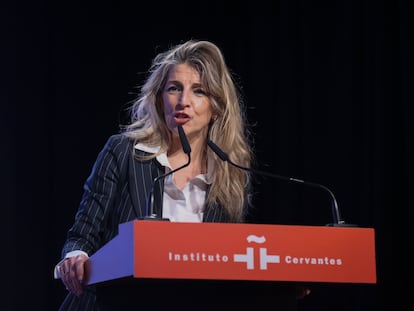
Spain’s political scene is once again in the spotlight: just days before the launch of a new left-wing coalition in Madrid, uncertainty remains over Deputy Prime Minister Yolanda Díaz’s participation in the project. For many voters, this event could be pivotal—it may determine whether leftist parties can regain trust and stabilize their positions by 2027. As the electorate grows weary of internal disputes and disappointment, the question of the future leadership and the coalition itself becomes increasingly pressing.
In recent weeks, all eyes are on whether Díaz will appear at the event in the Círculo de Bellas Artes. After her official visit to Cyprus, she has not made any public statements about her plans, fueling speculation about a possible departure. Meanwhile, she is returning to the public eye alongside Pedro Sánchez and labor unions to sign an agreement to raise the minimum wage—a key initiative that Sumar uses to showcase its importance in the government. Within the coalition, calls for unity are intensifying in the face of the threat from the right, highlighting the urgent need for consolidation.
Two parallel paths
At the same time, two initiatives are emerging within the left-wing camp. The first is a joint project by IU, Más Madrid, Comunes, and Movimiento Sumar under the slogan “Un paso al frente,” which for now avoids putting prominent faces on its posters. The second is a discussion entitled “Doble o nada: disputar el presente para ganar el futuro,” initiated by Gabriel Rufián (ERC) and Emilio Delgado (Más Madrid). This event has generated excitement despite the lack of official party support. Rufián, while remaining within ERC, calls for the creation of a new platform capable of countering the rise of the right, but his party is in no hurry to back such alliances.
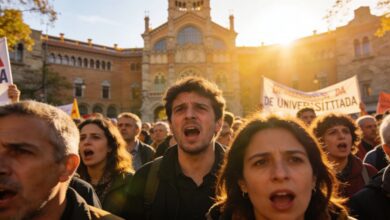
Disillusionment is growing among left-wing voters: over the 11 months between the last national and European elections, Sumar lost more than 70% of its votes, while Podemos remained on the sidelines. The new coalition aims not to repeat the mistakes of the past, when hurried unification occurred without a solid organizational foundation. This time, the focus is on involving ordinary members and building stable structures to avoid dependence on charismatic yet vulnerable leaders.
Challenges and divisions
The question of leadership remains unresolved: it is still unclear who will lead the new coalition or whether Díaz will be willing to take on that role. Internal disputes and the departure of Podemos from the alliance only add to the uncertainty. Some experts note that Rufián’s popularity stems from his ability to connect with people, but in Spanish politics, the rise of a leader is often followed by a rapid decline. The trajectories of figures like Rosa Díez, Albert Rivera, and Pablo Iglesias are prime examples.
Work on the new project began last summer after the arrest of former high-ranking socialist Santos Cerdán on suspicion of corruption—a development that sounded the alarm for Sumar and prompted them to speed up negotiations. Since then, working groups and a directorate have been formed, meetings have taken place weekly, and details were kept secret until December. Participants consider this approach an achievement, as information leaks had previously hindered the process.
Territorial question and prospects
Experts note that uniting left-wing and nationalist forces is complicated by differing views on the country’s territorial structure. For parties like ERC, EH Bildu, or BNG, it is difficult not only to moderate their rhetoric but also to explain an alliance with state-wide parties. In Spain, any talk of federalism draws criticism from the right, which sees it as a threat to national unity. In this context, as political scientist Paloma Castro points out, Rufián raises the issue of why the left failed to take advantage of PSOE’s weakening and stresses the need to reframe the political landscape.
Professor Jordi Pacheco from Barcelona believes that a joint list with nationalists could alienate part of Sumar’s electorate, and the complex rules for forming parliamentary groups only add to the challenges. He suggests considering technical alliances in small districts where the left currently lacks representation, so as not to lose votes.
The question of Díaz’s future remains pivotal: her decision could shape not only the coalition’s composition but also the left’s strategy for the coming years. Nevertheless, Díaz herself insists that focusing on personalities and brands is a mistake, urging attention on substance and objectives.
Context and recent trends
The surge of activity on the left coincided with significant changes in other regions. For example, in Aragón, the success of right-wing parties and rising support for Vox have already shifted the political balance, as examined in detail in the article on the transformation of the region’s political map. These developments are increasing pressure on the left, pushing them to seek new forms of cooperation and renewal. In recent years, Spain has witnessed not only the decline of major left-wing projects but also the emergence of new alliances trying to adapt to shifting public sentiment. Whether they can regain voters’ trust remains an open question.