Donald Trump has again found himself at the center of an international scandal, declaring that the United States must have full access to Venezuela’s natural resources. The American president did not stop at this demand: he openly threatened the country’s new leadership with military strikes if Washington does not get what it wants. This time, other countries in the region, including Colombia and Cuba, were also caught in the crossfire.
Aboard the presidential plane on his return to the capital from Florida, Trump did not mince words. He demanded that Venezuela’s interim leader, Delcy Rodríguez, grant American companies full access to the country’s oil and infrastructure. According to him, this is the only way to ‘restore’ Venezuela—and if the authorities do not agree, new strikes will follow. The US president stressed that American oil giants must return and ‘fix’ what he believes was taken from them by the previous regime.
Ultimatum and threat
Trump made it clear that the operation to detain Nicolás Maduro and his wife was just the beginning of a new US policy in the region. He even coined a name for it—the ‘Donroe Doctrine,’ referencing the historic Monroe Doctrine. According to him, the Western Hemisphere is within Washington’s sphere of influence, and any attempts at resistance will be firmly suppressed. Official reports say dozens of people were killed during the operation, and Maduro himself ended up in an American prison.
The US president did not hide that he is ready to launch another military intervention if Venezuela’s new leadership fails to meet his demands. When asked by reporters about the possibility of a second strike, he responded briefly: “It’s not out of the question.” At that moment, it became clear that Venezuela was not the only country in question.
Colombia in the crosshairs
Trump paid special attention to Colombia, accusing President Gustavo Petro of ties to the drug trade and stating he would not rule out an operation similar to the one in Caracas. According to Trump, the Colombian leader is “obsessed with cocaine” and has lost control of the country. Although Trump presented no evidence, his statements sounded like a direct threat.
In response, Petro called the US actions illegal and accused Trump of undermining international law. He stressed that Maduro’s arrest was nothing less than an abduction and accused Washington of infringing on Latin America’s sovereignty. The Colombian president also dismissed the drug trafficking allegations, stating that in half a century his name has never appeared in such cases.
Mexico and Cuba
During the press conference, Trump again raised the issue of military intervention in Mexico. He said he had repeatedly offered President Claudia Sheinbaum US military assistance to fight drug cartels, but she always refused, citing sovereignty. In Trump’s view, the Mexican authorities have lost control over crime, and the US could intervene at any moment.
The American leader did not ignore Cuba. He expressed confidence that the government of Miguel Díaz-Canel is on the verge of collapse due to the suspension of oil supplies from Venezuela. According to Trump, U.S. intervention on the island will not be necessary—the Cuban economy is already falling apart.
Who controls Venezuela
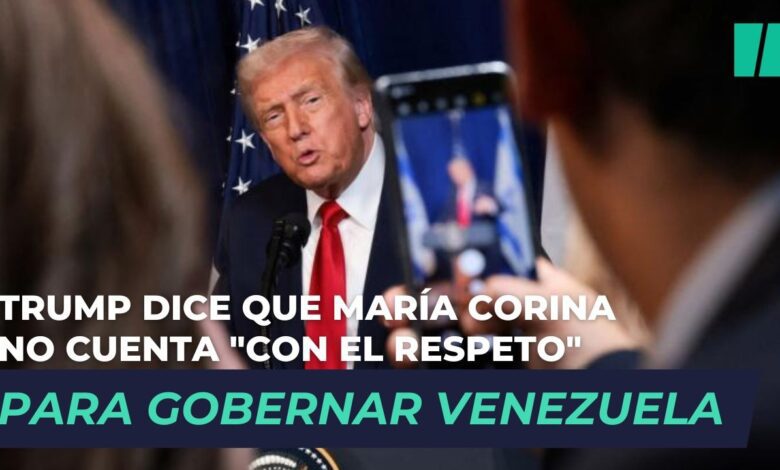
When asked about Venezuela’s future and potential elections, Trump gave an evasive answer but made it clear that it is the U.S. that will determine the country’s direction. He cast doubt on opposition leader María Corina Machado’s ability to run the government and hinted that key decisions will be made by American officials, including Secretary of State Marco Rubio and other members of his team.
At the same time, representatives of the U.S. administration stated they do not plan direct governance of Venezuela but intend to put pressure on the new government to ensure it implements necessary reforms. Until then, American sanctions against the country’s oil sector will remain in place, and foreign investment will only be possible on Washington’s terms.
Leftward shift under threat
All the countries that have drawn Trump’s attention share one thing—they are governed by leftist administrations. The American president does not hide that he sees such regimes as the main threat to U.S. interests in the region. His statements triggered a wave of outrage among Latin American leaders, who viewed Washington’s actions as an attempt to bring back the era of direct intervention and dictate.
Tensions in Latin America are rising again. Trump is showing a willingness to take extreme measures to maintain control over resources and the politics of neighboring countries. The question is, where will he draw the line—or will he stop at all?