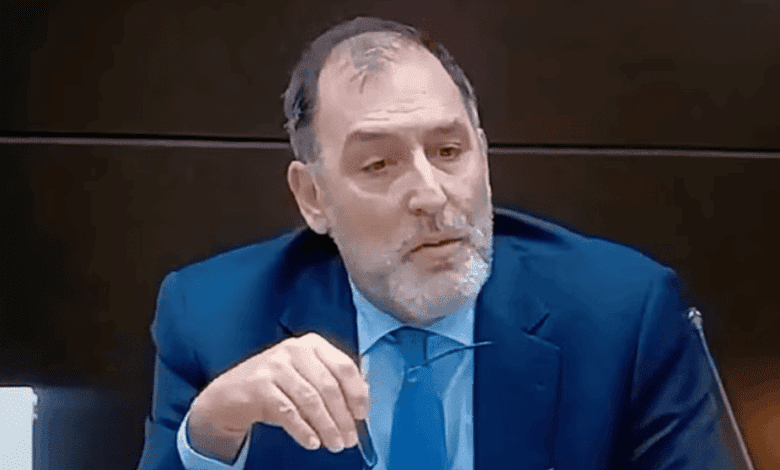
A scandal is brewing in Spain that could redefine the boundaries of acceptable conduct for members of the judiciary. The disciplinary body of the General Council of the Judiciary (Consejo General del Poder Judicial, CGPJ) has proposed sanctions for two judges over their public criticism of prominent politicians. This decision could set a precedent for the entire judicial system, where until now such cases rarely led to actual penalties.
The spotlight is on National Court judge Eloy Velasco and commercial court judge Manuel Ruiz de Lara. On different occasions, both made sharp remarks about former minister Irene Montero, current prime minister Pedro Sánchez, and his wife Begoña Gómez. Their words may now have serious consequences for their careers.
Reasons for the investigation
The disciplinary proceedings were initiated by Ricardo Conde, who oversees ethics in the judiciary. He proposed that his colleagues consider sanctions after a previous attempt to close the case in October of last year failed. The Council’s standing committee, headed by Isabel Perelló, insisted on continuing the investigation.
Judge Velasco found himself in the spotlight after his speech at a conference in November 2024. He criticized the sexual offenses law initiated by the Podemos party and made disparaging remarks about Irene Montero, reminding the audience of her previous job as a supermarket cashier. His words sparked a strong reaction from the public and his colleagues.
Velasco also questioned the legitimacy of the political forces involved in forming the government, which was seen as interference in the political debate from the standpoint of a judge.
Social networks and the limits of what is acceptable
The second figure in the case, Manuel Ruiz de Lara, made his statements on the X platform (formerly Twitter). In December 2024, he accused Pedro Sánchez of staging a ‘coup d’état’ and referred to his wife as ‘Barbigonia,’ posting a collage depicting Begoña Gómez as a Barbie doll. His posts were marked by sharp criticism of the government and suggestions of undermining democratic institutions.
This is not the first time Ruiz de Lara has faced disciplinary proceedings. In 2023, he called Sánchez a ‘pathological liar’ and the minister of justice a ‘servant-liar.’ That case was closed because the messages were deleted, making it impossible to determine authorship. This time, however, the posts have remained online, and the public reaction has been much stronger.
Debate over freedom of speech
A debate has erupted in the legal community over how much judges have the right to express personal opinions in the public sphere. Some argue that judges, even off duty, must maintain neutrality and restraint, while others insist on their right to free speech, especially in personal social media accounts.
The law regulating judges’ conduct was adopted back in 1985, long before social networks existed. Today, its rules seem outdated, and new challenges require a fresh approach. The question of where personal opinion ends and professional ethics begin remains unanswered.
Possible consequences
If the disciplinary commission approves the proposed sanctions, this will send a message to the entire judicial system: public statements, even in personal blogs, can lead to serious consequences. The law explicitly states that a judge may not use their status to endorse or condemn the actions of authorities, nor to show disrespect towards citizens or colleagues.
Previously, most such cases ended without consequences, but the current situation shows that tolerance for judges’ public attacks on politicians is decreasing. This could lead to stricter rules and the emergence of new standards of conduct for members of the judiciary.
In recent years, Spain has seen an increase in cases where judges and prosecutors have faced disciplinary proceedings over public statements. These issues have become especially pronounced amid political polarization and the widespread use of social media. In 2025, there was a case involving a Barcelona judge who was temporarily suspended for comments on Catalan independence. Earlier, in 2023, disciplinary action was taken against a prosecutor who criticized the Ministry of the Interior on the radio. These incidents highlight how the boundaries of what is acceptable for members of the judiciary are becoming increasingly blurred, while society and authorities seek a balance between freedom of expression and the need to maintain trust in the judicial system.