Spain’s decision to close its airspace to US military aircraft involved in the operation against Iran has become one of the most talked-about events in recent days. This move directly affects the country’s interests and could impact relations with key allies. As international tensions rise, Madrid’s stance takes on special significance for all of Europe.
After the Spanish government banned the use of Rota and Morón bases by US forces, it imposed a new restriction—closing its airspace to US military flights. According to a source in Donald Trump’s administration, Washington does not see the need for support from Spain or other countries to carry out the operation. As reported by RUSSPAIN, US forces continue to fulfill their missions without external assistance.
Response from Madrid and Washington
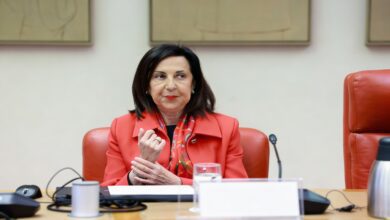
Defense Minister Margarita Robles emphasized that from the very beginning of the conflict, Spain had clearly stated its position: neither its bases nor airspace would be made available for military operations against Iran. She called the war illegal and unjust, stressing that Madrid does not intend to take part in such operations. This decision caused irritation in the White House, where Donald Trump repeatedly criticized the Spanish authorities, calling the country a ‘terrible partner’ and even threatening trade measures, despite the fact that Spain’s foreign policy is governed within the EU framework.
US Secretary of State Marco Rubio stated that after the conflict ends, Washington will reconsider its relationship with NATO, taking into account Spain and several other countries’ refusal to provide their bases. According to him, if the alliance does not guarantee mutual support, its value to the US is brought into question.
Political disputes within Spain
Domestically, the government’s decision sparked heated debate. Alicia García, a representative of the opposition Partido Popular, called the airspace closure an ‘improvisation’ and accused Pedro Sánchez’s cabinet of issuing contradictory statements. She recalled the recent deployment of the frigate Cristóbal Colón to Cyprus and questioned the consistency of the government’s actions. In her view, the authorities have not explained the reasons for the sudden policy shift or provided sufficient information to parliament.
In response, representatives of the ruling PSOE party stated that the decision fully aligns with the principle of ‘No to war’ and reflects Spain’s stance against military intervention. According to them, the opposition is not supporting measures to mitigate the economic consequences of the conflict and is simply engaging in criticism.
Impact on relations and alliances
The restrictions imposed by Spain have heightened tensions between Madrid and Washington. The future of military cooperation and Spain’s role in NATO remain uncertain. Analysis by russpain.com suggests that these actions could lead to a review of agreements on the joint use of military facilities and alter the balance of power in the region.
In recent years, Spain has already faced difficulties in its relationship with the United States due to disagreements over defense and foreign policy. Such situations have arisen when Madrid refused to participate in international military operations or restricted access to its facilities. These decisions have consistently sparked lively debates in society and parliament, as well as influenced the country’s image on the international stage. Attention is now focused on how events will unfold and what consequences this will have for security and diplomacy in Europe.