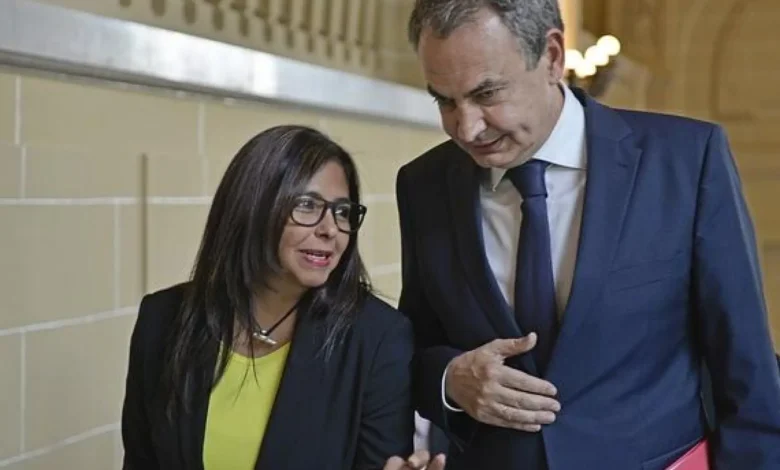
Events in Venezuela have a direct impact on Spain’s interests, as political changes in that country affect relations between Madrid and Caracas, as well as the lives of thousands of Spaniards and their descendants living in Latin America. Following the arrest of Nicolás Maduro and the beginning of the transitional period, Spanish society has focused its attention on the role of former Prime Minister José Luis Rodríguez Zapatero, who has unexpectedly found himself at the center of developments in Venezuela.
Enrique Márquez, one of the most prominent opposition figures, recently expressed public gratitude to Zapatero for his personal support during difficult times. According to Ale Espanol, Márquez noted that it was the former Spanish government leader who showed special concern while he was in detention and provided moral support to his family. This statement sparked lively debate among Spanish politicians and experts, as many had previously criticized Zapatero for his contacts with Venezuelan authorities.
Zapatero’s influence
The Venezuelan opposition is divided over the involvement of the Spanish politician in the process of change. Márquez, released in January after Maduro’s arrest, emphasized that Zapatero played an important role in supporting dialogue and seeking compromise among different political forces. According to him, it is thanks to such mediators that there is a chance for national reconciliation and the restoration of trust in society.
At the same time, part of the opposition continues to regard Zapatero with suspicion, believing his actions lack transparency. However, Marquez is confident that time will put everything in its place and the Spanish politician’s contribution will be duly recognized. He also emphasized that his own independence from party structures allows him to negotiate with various groups and seek paths toward unity.
The Spanish factor in changes sweeping Venezuela
Spain is closely monitoring the situation in Venezuela, as any changes there may affect economic and diplomatic ties between the two countries. Particular attention has been drawn to Zapatero’s upcoming appearance in the Senate, where he will have to explain his connections with the airline Plus Ultra, which received substantial financial support from the Spanish government. This episode has sparked new debates about the transparency and motives of Spanish politicians involved in Latin American affairs.
Interestingly, in recent times, Spanish politics has increasingly become a topic of discussion not only in Europe but also in Latin America. For example, a recent decision by Madrid authorities to award Donald Trump sparked a lively reaction in both countries, as detailed in the article about the scandal over awarding Trump a medal.
A transitional period and new challenges
After the release of Márquez and the arrest of Maduro, Venezuela entered a difficult phase of forming a transitional government. According to Ale Espanol, Márquez has become one of the key figures backed by international partners, including the United States. His main task is to establish dialogue among various segments of society and prevent the mistakes of the past from repeating. In this context, support from politicians like Zapatero is especially significant.
Márquez emphasizes that his main goal is to become a bridge between different groups and help the country emerge from its prolonged crisis. He does not hide that he is counting on Zapatero’s continued involvement in the reconciliation process, despite criticism from some members of the opposition. Venezuela faces difficult trials in the months ahead, and the country’s future will depend on how well unity can be maintained.
In recent years, Spain has repeatedly become involved in Latin America’s political processes. Scandals related to support for certain leaders or companies have often sparked heated debates in Spanish society. For example, discussions about financial ties between Spanish politicians and Latin American entities have repeatedly led to parliamentary inquiries and public statements. Such cases highlight how closely the destinies of the two regions are intertwined and how decisions made in Madrid can affect the lives of millions across the ocean.