The Vox party’s decision to withdraw its abstention in the vote for María Guardiola’s candidacy as head of Extremadura was an unexpected twist for the region’s political landscape. Now, the formation of a government is under threat, and the prospect of new elections is becoming increasingly likely. For the people of Extremadura, this means uncertainty regarding the budget, social programs, and the stability of the authorities.
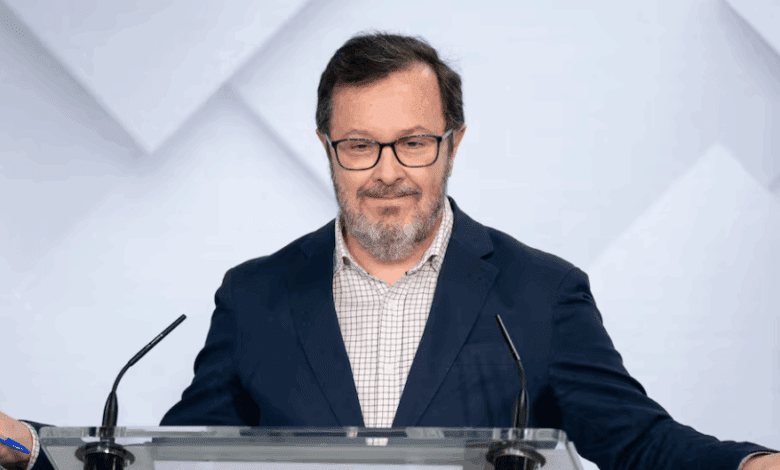
Previously, it was assumed that Vox might abstain, allowing Guardiola to secure the presidency with only the support of the Partido Popular (PP). However, the far-right party is now insisting on a review of key policies and demanding participation in the region’s administration. Vox spokesperson José Antonio Fúster stated after the political committee meeting that the party does not intend to merely observe the process but will strive for real change. In his words, “abstention is not being considered.”
Negotiations and Ultimatums
The situation is further complicated by the fact that without Vox’s support, Guardiola lacks a majority in the regional assembly. If no agreement is reached, the region may have to hold new elections. The timeline is tight: the vote on the candidacy must take place no later than March 3, and if an absolute majority is not achieved in the first round, a second round will be held 48 hours later. If a president is not elected within two months, the assembly will be dissolved automatically.
Despite public disagreements, Vox representatives claim that negotiations are more active than they appear. Fuster noted that discussions with Guadiola’s team were more intense than she herself is willing to admit. At the same time, Guadiola stated in an interview that she would like Vox to be her coalition partner, emphasizing that the parties have more in common than differences. This statement came just a few days after she categorically rejected any “transformation” into Vox.
Public statements and hidden motives
In response to Guadiola’s attempts to draw closer to the far right, Vox reacted cautiously, calling her compliments restrained. Fuster wryly noted that Guadiola’s current position is very different from her previous statements, when she criticized Vox leader Santiago Abascal. He stressed that the party does not intend to negotiate via the press or interviews, but is waiting for concrete proposals at the negotiating table.
While both sides exchange statements, no formal meetings have taken place. Vox emphasizes that the negotiations over Extremadura, Aragon, and Castile and Leon are proceeding independently of each other, and that the party is not engaging in tactical maneuvers. Nevertheless, Fuster did not rule out the possibility that an agreement in Aragon could be reached before one in Extremadura.
Consequences for the region
If no compromise is reached, Extremadura faces new elections, which could delay the formation of the government and the adoption of important decisions. For the region, this means a postponement of budget initiatives and potential changes in social policy. In such situations, as shown by the recent political crisis in Adamuz, when the opposition issued ultimatums and demanded resignations, social tensions only increased. Read more about how such conflicts affect political stability in the article on the political storm surrounding the accident in Adamuz.
In the coming weeks, attention will be focused on negotiations between the parties. Any shift in position by one of the sides could prove decisive for the region’s future. As political alliances become increasingly fragile, the outcome of the talks in Extremadura may serve as an example for other autonomous communities in Spain.
In recent years, Spain has repeatedly faced situations where the lack of a clear majority led to prolonged negotiations and the threat of new elections. In 2023, a similar uncertainty was seen in Murcia and Castilla-La Mancha, where forming coalitions took months. Such political deadlocks are often accompanied by growing public dissatisfaction and a slowdown in making key decisions. In these circumstances, even small concessions or unexpected alliances can radically shift the political landscape of the region.