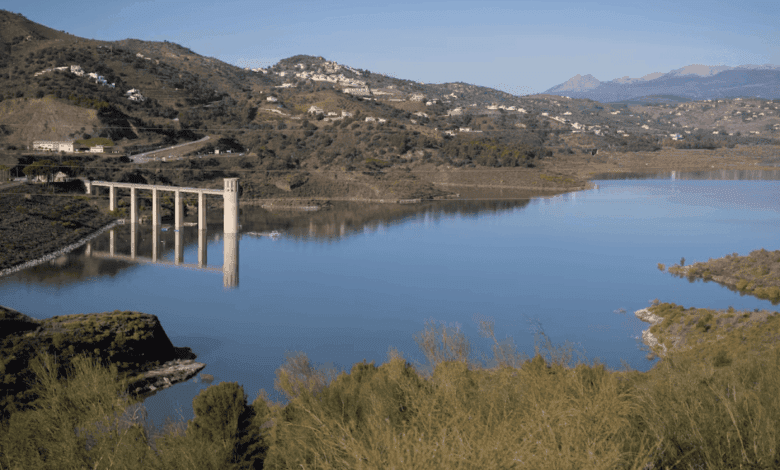
Until recently, the eastern part of Málaga resembled a scorched desert: dried-up banks, cracks at the bottom of reservoirs, and an unsettling silence. In January 2024, the water level in the largest local reservoir, La Viñuela, dropped to a historic low—just 12 cubic hectometers, a mere 7% of its designed capacity. For five consecutive years, the region was battered by relentless drought, and it seemed that nothing would ever change.
But nature had other plans. Starting in autumn 2024, long-awaited rains swept across the province, and in January 2026, the powerful Francis cyclone finally turned the tide. As a result, Málaga’s reservoirs are now 56% full—that’s 342 hectares of water, triple what they held at the start of 2024. La Viñuela, once a symbol of disaster, now holds 46% of its capacity. For local residents, this has brought real relief: for the first time in years, not a single municipality faces water restrictions.
Much-needed relief
Regional authorities aren’t hiding their relief, but they’re not rushing to celebrate, either. Agricultural leaders and water resource experts caution that despite the improving situation, it’s too soon to relax. Water remains a vulnerable resource in Andalucía. Even now, with increased reserves, caution in usage remains paramount.
Hydrogeologists note that not only surface water but also groundwater has begun to recover. This is especially important for agriculture, which in recent years has been teetering on the brink of survival. In Axarquía, where avocados and mangoes are cultivated, farmers have finally received permits for limited irrigation. However, there is a sense of cautious optimism: no one has forgotten how quickly drought can return.
Agriculture and its challenges
For Málaga’s farmers, the current situation is a breath of fresh air. Yields of tropical crops, which depend on reliable water supplies, were under threat in the driest years. Now that irrigation permits have been partially restored, farmers can plan the season with fewer risks. Still, the picture remains complex: the infrastructure for storing and distributing water continues to fall short.
The Association of Tropical Crop Producers stresses that the region cannot survive without new water projects. Construction of a desalination plant in Axarquía, which has been discussed for years, is still unfinished. This means that, even with current reserves, long-term security remains uncertain.
An environmental perspective
Environmentalists do not share the officials’ and farmers’ optimism. They insist that Málaga’s current water use system is unsustainable. High demand from the tourism sector, widespread construction of swimming pools and golf courses, as well as intensive agriculture all contribute to inefficient water consumption.
According to environmentalists, the region needs not only infrastructure upgrades, but also a fundamental rethink of its development model. Without this, any rainfall or cyclones will only offer a temporary reprieve. Otherwise, Málaga risks facing another water crisis at the first sign of drought.
Looking Ahead
Today, Málaga exists between relief and anxiety. Water has returned, but no one knows for how long. Authorities have promised to review consumption standards and may increase limits for municipalities. However, experts warn that climate risks remain, and the region will have to learn to live with ongoing uncertainty.
For now, residents and farmers are enjoying the rare opportunity not to think about water every minute. But it’s not the time to relax: recent years have shown just how fragile water security can be, even in the best of conditions.