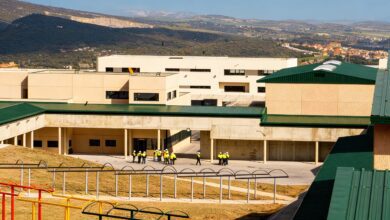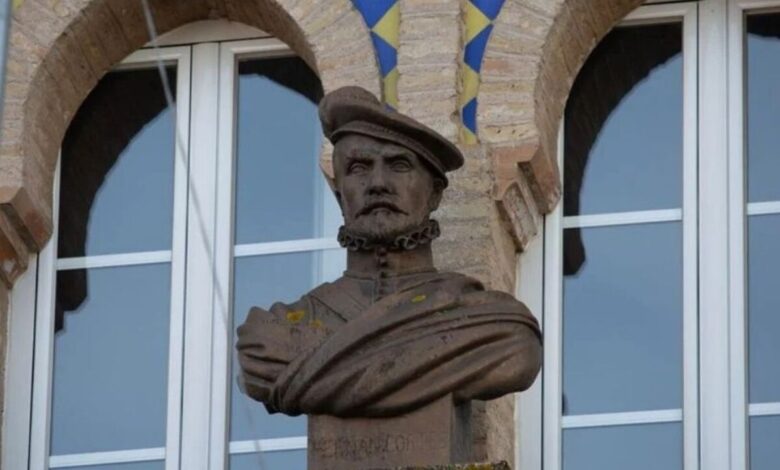
In the heart of Andalusia, just a few kilometers from Sevilla, stands a building that’s impossible to mistake for any other. In Castilleja de la Cuesta sits the palace where, in 1547, Hernán Cortés— the man who changed the course of Mexico’s history— spent his final days. Today, it’s filled with the noise of schoolchildren during recess, but these walls remember a very different era: intrigues, ambition, and royal visits.
Built in the 16th century, this house originally belonged not to Cortés but to Juan Rodríguez, a city official who was not only an influential Sevilla resident but also a close friend of the famed conquistador. When Cortés’s health failed, it was here that he found refuge— far from the storms of the New World and the political battles that ultimately denied him a return to power in New Spain.
The Final Days of Cortés
Within these walls, Cortés spent his last months, dreaming of returning to Mexico to be buried in the land he had conquered. But fate decided otherwise: on December 2, 1547, he died at the age of 62. On one of the doors, you can still see a memorial plaque marking the death of the great conquistador. His remains, however, took a long journey— moved nine times before finally resting in México, in a place closed to outsiders.
The building’s exterior stands out at first glance: massive brick walls, crenellated towers, and austere lines. Although the palace was built during the Renaissance, its current appearance is the result of extensive 19th-century renovations, when the Neo-Mudéjar style became fashionable. This gives the residence a unique ambiance—a blend of fortress and aristocratic mansion.
The Palace and the Crown
For a long time, the building stood empty until 1855, when it was acquired by the Dukes of Montpensier—Antonio de Orleans and Luisa Fernanda de Borbón. The palace became their summer residence, a place of retreat from the bustle of Seville. The interiors were refurbished, the gardens expanded, and the residence itself was transformed into a true palace worthy of royalty.
Later, the palace passed to María de las Mercedes de Orleans, the Dukes’ daughter, when she married King Alfonso XII. But happiness was short-lived: the young queen died just five months after the wedding, leaving the building once more in the shadows. The king never returned, but archival records still preserve accounts of visits by Queen Isabel II to this unusual corner of Aljarafe.
A Palace Transformed
At the end of the 19th century, the palace’s story took a dramatic turn. In 1899, nuns from the Institute of the Blessed Virgin Mary—known locally as the ‘Irish Sisters’ due to their roots—arrived here. They rented the building from Queen María Cristina, and four years later became its owners. Thus, the former residence of Cortés and Spanish royalty was transformed into a Catholic educational institution.
Since then, the palace has served as a school but has retained its uniqueness. The Neo-Gothic chapel, opened in 1910, is still preserved here, and inside you can find details that recall the turbulent life of Cortés. Today, this is more than an educational center—it is a living monument to history, where every corner breathes with the past.
Memory and Modernity
Today, the palace in Castilleja de la Cuesta is not just a school, but a symbol of an entire era. Its walls have witnessed the ambitions of a conquistador, the splendor of royal receptions, and the modest life of nuns. Here, history does not gather dust in the archives—it lives on every day, among children’s voices and the sound of school bells.
Within these walls, the fates of people who changed the course of Spain and America have become intertwined in remarkable ways. The palace has become part of city life yet kept its aura of mystery. It still holds secrets that no tour can reveal. And perhaps this is exactly what makes it truly unique.