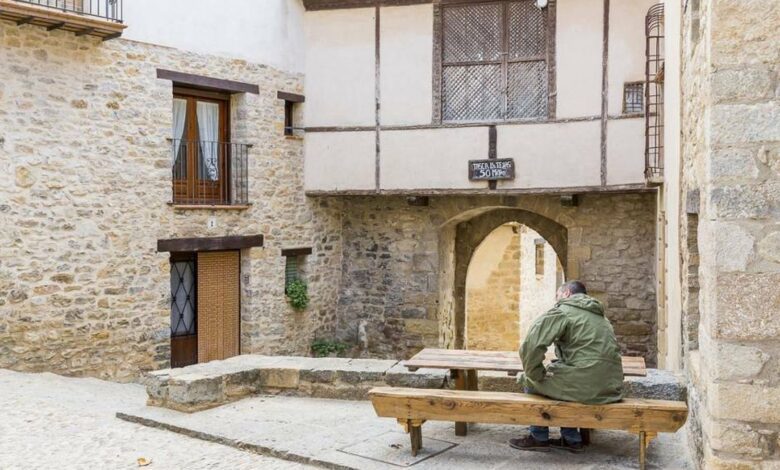
In the heart of the Maestrazgo region in Aragon, province of Teruel, lies Mirambel—a village often described as one of Spain’s most underrated gems. It is a place where time seems to have stopped, preserving the atmosphere of the Middle Ages untouched. Thanks to its remarkable preservation, since 1980 Mirambel has held the status of Bien de Interés Cultural (Object of Cultural Interest) and was honored with the prestigious Europa Nostra award for its careful approach to architectural heritage.
The village is completely surrounded by defensive walls built in the 13th century by the Knights Templar. Five gateways have survived to this day, leading inside. The main entrance, known as Portal de las Monjas (Gate of the Nuns), is adorned with a unique gypsum latticework. Passing through it, you enter the historic center, where narrow cobblestone streets form a true labyrinth. The absence of modern elements in the architecture allows you to fully immerse yourself in the past.
Inside the walls, Mirambel is a collection of aristocratic houses with coats of arms on the facades, wrought-iron balconies, and carved cornices. Among the most notable buildings are the Casa Consistorial (Town Hall), Casa Aliaga (Aliaga family residence), and of course, the Convento de las Agustinas (Augustinian convent). Each structure here is more than just an architectural monument—it is a living witness to centuries of history.
The monastery, founded in the 16th century, holds a special place in Mirambel’s history. The nuns there led a cloistered life, and their only window to the outside world was the very grating on the Nuns’ Gate, through which they could observe life outside while remaining unseen. Although the community relocated in 1980 and the monastery was abandoned, its walls, cells, and archives still preserve the spirit of bygone eras.
Mirambel is not only an architectural monument but also an example of sustainable rural development. With a population of just over one hundred, the village has managed to maintain its identity thanks to cultural initiatives and the development of tourism focused on honoring its history. The surrounding mountain landscapes are ideal for hiking and cycling, while nearby villages such as Cantavieja and La Iglesuela del Cid offer further opportunities to explore the Templar heritage of the region.