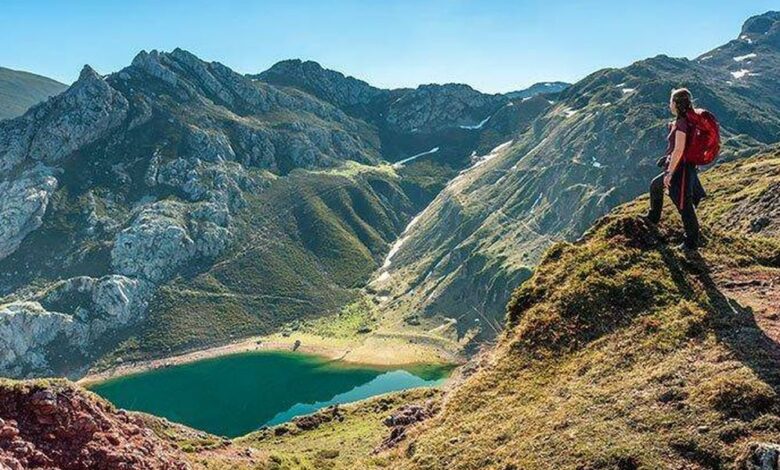
In the heart of the Cantabrian Mountains, within Asturias, lies a remarkable land where nature has preserved its primeval strength. This is Somiedo, a place that in recent years has become a true haven for wildlife enthusiasts. Its glacial lakes, dense beech groves, and rugged mountain scenery create ideal conditions for countless species, but the main star here is the Cantabrian brown bear. Just a few decades ago, an encounter with this majestic creature seemed almost imaginary, but today, thanks to tremendous conservation efforts, it is now possible. A patient and quiet observer may be rewarded with an unforgettable sight: the silhouette of the imposing ruler of the mountains leisurely descending a slope.
The road to restoring the population was long and challenging. In the 1970s and 1980s, there were no more than 80 individuals across the entire Iberian Peninsula. The combined efforts of conservation organizations and authorities have paid off. According to the latest counts conducted by the autonomous communities, today about 350 bears live in these mountains, and Somiedo is at the heart of this rebounding population. Gaining park status in 1988 and later being declared a UNESCO Biosphere Reserve in 2000 have played a crucial role in protecting this unique territory spanning more than 280 square kilometers.
The Somiedo landscape is a picturesque mosaic, where steep valleys give way to karst formations, and traditional stone huts with thatched roofs, known as “brañas”, can still be seen on the high mountain pastures. For those eager to spot bears, special observation platforms have been set up. Places like Mirador del Príncipe in the Peral area or the viewpoint in Gua have become favored spots for watching wildlife from a safe distance without disturbing them. These are not just points on the map, but true windows into the wild world.
However, the pursuit of impressions must be responsible. Approaching or disturbing animals is strictly forbidden. The best way to get to know the local fauna is to rely on professional guides. They not only know the most hidden corners and the best times for observation, but also ensure the safety of both visitors and the park’s inhabitants. The most favorable seasons are spring, when animals emerge from hibernation in search of food, and autumn, when they are actively preparing for winter. During these periods, the chances of sightings increase significantly.
Many local companies offer organized tours, typically four-hour excursions departing from Pola de Somiedo. Groups are kept small, ranging from two to eight people, to minimize environmental impact. Tours are scheduled for early morning or late afternoon, when animal activity peaks. The cost for adults is about 50 euros, with children’s rates at half price. These outings offer not only the chance to spot wildlife, but also an educational route where guides share their knowledge about bear behavior and the biodiversity of the reserve. Participants are provided with professional optics—binoculars and telescopes—allowing them to observe animals in detail without disturbing them. Of course, no one can guarantee a sighting, as this is wild nature in all its unpredictability. However, even if the main star doesn’t appear, a trip to Somiedo will leave a lasting impression. The grandeur of mountain lakes such as Saliencia or del Valle, and the beauty of ancient oak and beech forests, are reason enough to visit this remarkable corner of Spain, where tradition and wildlife exist in perfect harmony.