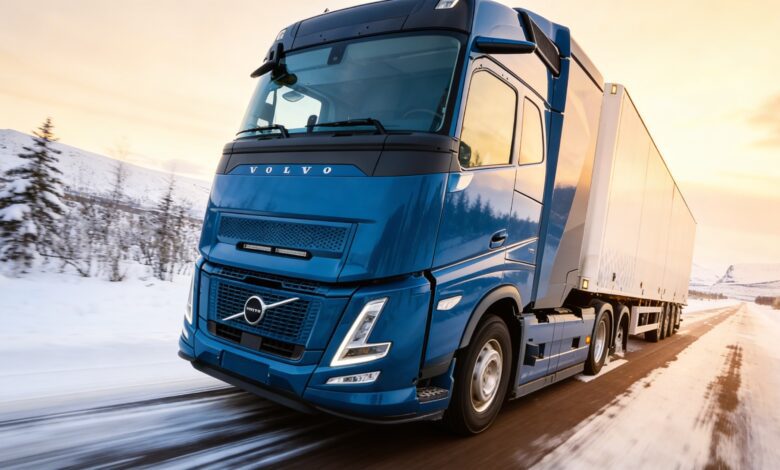
Tests of new Volvo trucks with hydrogen engines have already begun, marking a potential shift in the approach to commercial transport across Europe. The manufacturer focuses on combining high performance and long range—key factors for transport companies unwilling to trade efficiency for environmental goals. Unlike electric models, which are often limited by range and charging time, Volvo’s hydrogen trucks promise to serve routes that previously were only possible with diesel. This approach could help lower CO2 emissions without disrupting established business operations.
In recent years, the truck transport market has undergone a real technological transformation. Electric and hybrid vehicles have gained their place, but often fall short for long-haul journeys. Hydrogen engines, now being actively introduced by Volvo, may offer a compromise between sustainability and practicality. According to RUSSPAIN.COM, these solutions could speed up the industry’s shift to zero emissions without adding new restrictions for carriers. Volvo notes that their new technology is based on a high-pressure direct injection system already tested in Volvo’s gas-powered models, which improves reliability and lowers fuel consumption.
Technology and advantages
The main advantage of Volvo hydrogen trucks is the combination of power and range. According to company representatives, the new engines outperform electric counterparts in torque and dynamics, with a driving range approaching that of diesel models. This means carriers can plan routes without relying on charging infrastructure, which is still unevenly developed. Hydrogen trucks also have a faster refueling time: the process takes just a few minutes, which is crucial for logistics with tight schedules.
The company emphasizes that road testing is a key stage before launching mass production. Engineers are already analyzing vehicle performance in real conditions to identify weaknesses and improve the design. This approach helps avoid the problems faced by electric vehicle manufacturers during the market’s early stages. Incidentally, there has been recent news about new electric car batteries promising up to 1,000 km of range—read more about this in the article on new battery technologies for electric vehicles.
Market and outlook
Volvo is not limiting itself to hydrogen models: the lineup already includes electric trucks, fuel cell vehicles, and renewable fuel options. However, hydrogen engines may be the key to a widespread transition to eco-friendly transport in the long-haul segment. The company aims to bring new trucks to market by 2030, with the first test batches already undergoing trials on European routes. According to experts, the project’s success depends not only on the vehicles themselves but also on the development of hydrogen refueling infrastructure.
Switching to hydrogen engines requires investment not only from manufacturers but also from the government. Without legislative support and investment in refueling stations, large-scale adoption could be delayed. Nevertheless, Volvo remains confident in the technology’s potential and already offers customers different decarbonization options for their fleets. The company believes that flexibility and a variety of solutions are the main arguments in favor of transitioning to new types of fuel.
Challenges and Expectations
Despite Volvo’s optimism, challenges remain on the road to widespread adoption of hydrogen trucks. The main issue is the cost of manufacturing and maintaining the new engines. For now, these vehicles are more expensive than their diesel and electric counterparts, but the company expects prices to fall as production scales up and technology advances. Another challenge is building a refueling network, without which long-haul trips are impossible. However, the experience with gas-powered trucks shows that with support from government and business, such projects can be implemented faster than it might seem at first glance.
The truck transport market could undergo a dramatic transformation in the coming years. If Volvo succeeds in launching hydrogen models, it will mark a significant step toward reducing emissions and improving transport efficiency. Hydrogen trucks have the potential to shift the market balance and set new standards across the entire industry.
Volvo is one of the world’s largest truck manufacturers, renowned for its innovative transport solutions. The company actively invests in sustainable technologies, including electric, gas, and now hydrogen engines. Over the past decades, Volvo has repeatedly been a pioneer in safety and energy efficiency, and its new projects confirm the brand’s commitment to leadership in sustainable development. Hydrogen trucks are the next step in the company’s strategy to create the transport of the future, combining environmental friendliness, power, and practicality.