AbbVie's top executive in Spain warns that the country could lose its place in global medical innovation unless it ramps up investment and reforms. He calls for bold moves to keep Spain competitive as Europe trails the US and China.
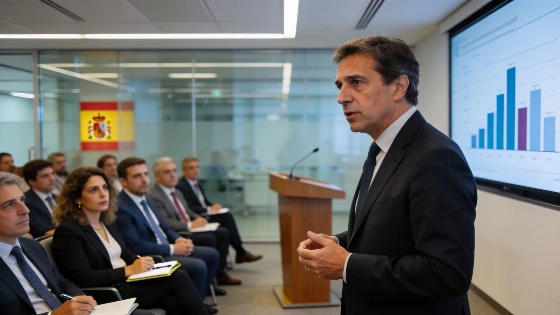
Felipe Pastrana, vice president and general manager of AbbVie España, put Spain’s pharma sector on notice this week. He told the VII symposium of the Observatorio de la Sanidad that Spain faces a real risk of losing ground in the global push for medical innovation if it does not act fast.
Pastrana didn’t mince words. Spain’s population has grown from 47 to 50 million, but spending on medicines as a share of GDP is stuck at 1.6%. “We are well below the European average,” he said. That gap, he argued, threatens both patient care and Spain’s scientific reputation. AstraZeneca’s data shows Spain is still a top European spot for clinical research, with the company set to invest about €700 million in 2025 and run 258 clinical trials involving more than 15,000 patients.
In Madrid alone, the health and biotechnology sector comprises about 800 companies and employs 50,000 people, with a concentration of research centers, universities, and hospitals.
Pastrana laid out what AbbVie is doing to push back against this trend. The company plans to keep investing in Spain’s research network, expand the AbbVie Spain Research Academy, and build deeper ties with institutions like the Universidad Autónoma de Madrid. These moves focus on cancer, neuroscience, and immunology—fields where Spain already has a strong track record in clinical trials. CPHI, an industry source, projects the Spanish pharma market will hit roughly €35 billion by 2026 and grow at 4.8% a year through 2030. That growth, Pastrana said, gives Spain a solid base for more investment.
But Pastrana argued that real innovation goes beyond new molecules. “A molecule brings innovation, but if you only change the molecule, there will be no disruption,” he said. He pushed for a full rethink of care practices and called for everyone—researchers, doctors, and policymakers—to get on the same page. With strong R&D, he claimed, the time to develop new therapies could drop by up to half. Still, Incyte Biosciences Iberia pointed out that delays between drug approval and patient access remain a big hurdle, even after €130 million went into Spanish R&D over the last eight years.
Pastrana also challenged the idea that healthcare spending is just a cost. “Every euro invested in health has an economic impact of four euros,” he said, pointing to studies that link pharma investment to higher productivity, less absenteeism, and better quality of life. He noted that 73% of the rise in life expectancy comes straight from new medicines. Farmaindustria, the main industry group, has called for more than just higher spending. They want faster admin processes, more early-phase research, and a bigger role for primary care and patients to keep Spain’s edge in clinical trials.
In October 2026, Farmaindustria urged the new Spanish government to form a strategic alliance to make Spain a European benchmark in health and innovation, reflecting a sector-wide push for long-term strategy beyond individual company interests.
The numbers show the threat is real. Pastrana said the US now drives over 40% of global pharma innovation, China 45%, while Europe is falling behind. He warned that this gap is eating away at Europe’s and Spain’s place in the sector. These concerns echo recent reports of regulatory delays and investment headaches for other pharma companies in Spain.
Pastrana’s message to Spain’s next government is blunt: put public-private alliances at the top of the agenda to protect the health system’s future. The outcome will shape not just the pharma industry, but Spain’s economy and the lives of millions. With the global innovation gap growing, Spain’s next moves will decide if it stays in the race or slips further behind. The numbers are clear—without bold action, Spain’s pharma ambitions could be left in the dust by faster-moving rivals.