Honda has unveiled the Acura Nexera Vision Concept, a dramatic design study that revives the spirit of the NSX and sets the tone for the next generation of Acura hybrids. The concept introduces radical proportions and innovative features that could shape the brand’s upcoming models.
The Acura Nexera Vision Concept has made its debut, offering a glimpse into Honda’s vision for the future of its premium brand. Far from a production-ready sports car, this prototype stands out for its low-slung silhouette, supercar-inspired proportions, and a host of design elements that are set to influence the next wave of Acura vehicles, starting with the upcoming RDX Hybrid.
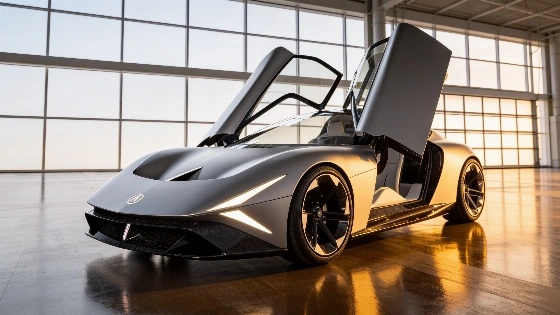
What immediately sets the Nexera Vision Concept apart is its dramatic stance: a sharply raked, ultra-low front end, an elongated hood, and a cabin pushed far back on the chassis. The bodywork is wide and clean, with butterfly doors on double hinges that reinforce its status as a pure design exercise—one unlikely to reach showrooms unchanged.
Despite its futuristic appearance, Acura has used the concept to introduce several features that could realistically transition to production. The most notable is a new lighting signature inspired by the Acura 'A' emblem. Both headlights and taillights are razor-thin and nearly invisible when off, but when illuminated, the effect—dubbed “phantom lighting”—makes the light appear to emerge directly from the body panels.
“To reinforce Acura’s new design identity, we developed a unique lighting signature inspired by the 'A' emblem—an unmistakable element designed to make this new era instantly recognizable,” explained Yasutake Tsuchida, Acura’s creative director and vice president of automotive design. “The Nexera Vision sets the course for Acura’s next generation of design, and we are committed to evolving in this direction with clarity, consistency, and purpose.”
Aerodynamics play a central role in the concept’s philosophy, following the principle that form follows function. The Nexera Vision features an active rear wing, a large rear diffuser, and multiple channels to manage airflow around the car. Many of these components are crafted from forged carbon, which also appears on the side skirts and other exterior elements.
The 22-inch wheels, the largest ever fitted to an Acura concept, use a central locking design—a first for the brand—and reveal Brembo carbon-ceramic brakes. Inside, the focus on the driver is taken to the extreme. The two seats are fixed directly to the floor, placing occupants closer to the road, while the steering wheel and pedals adjust to fit the driver, not the other way around.
The cabin is stripped back to the essentials, with a panoramic digital instrument cluster divided into three sections and a flat-bottomed steering wheel missing its upper arc. Materials include leather, Alcantara, glossy black surfaces, and sustainable options like recycled aluminum, recycled polyester, and CircuLeather—a material designed for a more circular lifecycle. The interior is dominated by black and white tones, with subtle pink accents providing contrast.
“We used Acura’s 40th anniversary as a springboard for our future, with the Nexera Vision serving as the design language for upcoming models. Our goal is to define Acura’s performance through precise proportions, sculpted forms, and seamless integration of advanced technology, creating an expression that is both progressive and authentic,” Tsuchida added.
Technical details remain under wraps, as the Nexera Vision is purely a design study. Honda has not disclosed any information about the powertrain or performance, leaving open questions about what will ultimately reach production. For now, the concept’s main role is to set the visual direction for Acura’s next generation of hybrids, with the RDX Hybrid expected to be the first to adopt these cues.
Acura’s approach echoes a broader trend among premium automakers, where bold concept vehicles preview the styling and technology of future models. This strategy can be seen in other brands as well, such as the recent DS Nº8, which challenges conventional electric car design by blending sedan and SUV elements—a move highlighted in this recent report.
As the automotive industry accelerates toward electrification and sustainability, concepts like the Nexera Vision serve as both a design manifesto and a testing ground for new ideas. While not all features will make it to production, the concept’s influence on Acura’s future lineup is clear, marking a decisive step in the brand’s evolution.