Spain's smallest villages keep losing residents despite rare births. Local housing initiatives, not employment alone, have proven most effective in attracting new families. The demographic challenge remains acute in rural regions.
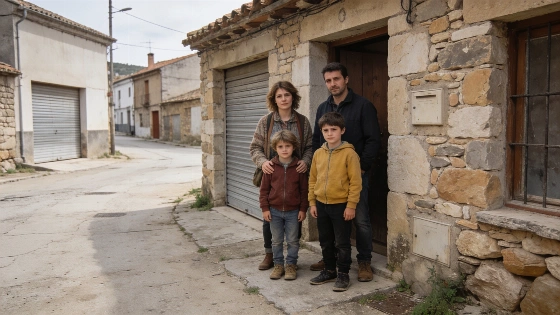
Spain's rural depopulation remains a pressing issue, with isolated births in small villages failing to reverse decades-long trends. In Laguarta, a remote village in Huesca, the birth of Miguel Marín in 2010 was celebrated as a sign of hope after 40 years without a newborn. Yet, fifteen years later, the population has not grown. Miguel, now a teenager, lives with his family—one of only four residents left. His brother is the only other child in the village, highlighting the ongoing demographic struggle.
Similar stories have emerged elsewhere, such as in Benizalón, Almería, where the arrival of a newborn after 15 years brought brief optimism. However, these events are exceptions in a landscape where most small municipalities continue to lose inhabitants. According to the Ministry for the Ecological Transition and Demographic Challenge, municipalities with fewer than 5,000 residents gained 22,020 people in 2024, totaling 163,027 since 2018. Yet, the smallest villages are still shrinking, and the overall trend remains negative for much of rural Spain.
Some towns have managed to buck the trend through targeted housing policies. In Paredes de Nava, Palencia, the local government’s TuTecho program, which connects property owners with families seeking work, has helped increase the population by 70 over two years. The renovation of abandoned homes attracted dozens of new residents, including 19 children. Villada, also in Palencia, saw its population rise from 834 to 863, a rare increase attributed to affordable housing and agricultural employment, as well as the arrival of Latin American and African migrants. The mayor notes that the number of young people has stabilized, and the local school has maintained its student count thanks to incoming families.
Despite these isolated successes, the broader picture is stark. Over the past decade, eight out of ten villages have lost residents. The problem is especially acute in the Celtiberian Highlands, spanning provinces like Burgos, Segovia, Soria, La Rioja, Zaragoza, Teruel, Guadalajara, and Cuenca. This region, often called the Spanish Lapland, has more than 1,300 municipalities with a population density of just seven people per square kilometer—comparable to northern Scandinavia.
Experts caution against reading too much into individual cases. Milagros Alario, a geography professor at the University of Valladolid, describes these births as isolated incidents. She points out that while some regional centers may gain residents, it often comes at the expense of smaller villages. Employment alone is no longer enough to anchor people to rural areas; housing and leisure services are now equally critical. Alario also notes that migration slows depopulation but does not reverse it, as migrant families tend to have fewer children than in the past.
Urban growth in small and medium-sized cities like Segovia or Guadalajara does not offset rural decline. Sociologist Javier Rueda from the Complutense University of Madrid argues that affordable housing is now the main factor influencing where people settle, as long commutes to work are increasingly tolerated if housing costs are lower. However, a real demographic turnaround would require a sustained increase in births, which is not yet visible.
In Valcuende, a hamlet in León, the birth of Iván González during the pandemic briefly made headlines as the first child to live there year-round in over sixty years. Yet, after a short-lived influx of newcomers, only the González family and their livestock remain. The father, Miguel González, says that many who moved in during the pandemic left after realizing rural life was not for everyone. His efforts to maintain the family home and farm are aimed at giving his children the option to stay, but he acknowledges the ongoing exodus from the region.
While rare births in rural Spain often attract media attention, the underlying demographic challenge persists. As highlighted in a related report on the impact of population changes in León, recent incidents have shown how fragile these communities can be. The future of Spain's emptying villages increasingly depends on practical measures—especially affordable housing—rather than symbolic milestones.
Spain's rural depopulation is rooted in decades of migration to cities, aging populations, and limited economic opportunities. Government programs now focus on revitalizing villages through housing incentives, infrastructure improvements, and support for local businesses. However, experts agree that reversing the trend will require sustained investment and a combination of housing, employment, and social services. Without these, isolated births will remain symbolic rather than transformative for the country's rural heartland.