Spanish law requires property owners to accept the role of community president. However, seniors can be excused for health or age reasons. Most communities resolve these cases internally, but legal backing exists if needed.
Spanish property law obliges homeowners to take on the role of community president, but for many older residents, this responsibility can become unmanageable. The position involves legal representation, managing building issues, and resolving disputes—tasks that may be overwhelming for those facing age-related challenges or health problems. While the law sets a default expectation of acceptance, it also provides a clear path for seniors to step aside when justified.
Article 13.2 of the Ley de Propiedad Horizontal (Horizontal Property Law) makes the appointment of a president mandatory. However, it also allows the designated owner to request exemption from a judge if there are valid reasons. In practice, age and health are the most common grounds for such requests. Spanish courts have repeatedly recognized that advanced age, chronic illness, or cognitive limitations can make it unreasonable to expect someone to fulfill the president’s duties.
Most communities avoid legal proceedings by resolving these situations during the homeowners’ meeting. When an elderly resident explains that age or health prevents them from serving, the group typically agrees to appoint the next person in line. This decision is then recorded in the meeting minutes, providing official documentation of the exemption. The process is designed to be practical and respectful, minimizing conflict and legal costs.
There is no automatic age threshold for exemption, but several scenarios are widely accepted by both communities and courts. These include chronic illnesses or physical decline supported by medical reports, mobility issues that hinder building management, cognitive impairments linked to aging, and difficulties with digital administration, which is increasingly common in property management. Additionally, seniors who do not live in the building year-round—often because they stay with family or in care facilities—are frequently excused from the role.
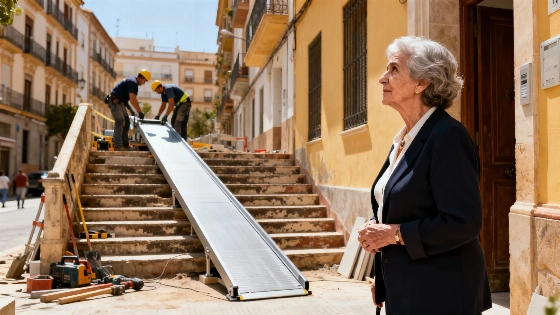
It is worth noting that Article 10.1.b of the same law specifically references residents over 70 when mandating accessibility improvements, such as installing elevators or ramps. This highlights the legal recognition of age-related needs within Spanish housing regulations. Experts often advise communities to formalize internal agreements or update their statutes to exclude older owners from mandatory rotation, reducing the risk of disputes or court cases.
Spain’s approach to property management reflects a broader trend toward accommodating the needs of an aging population. The legal framework aims to balance the smooth functioning of homeowners’ associations with the realities faced by seniors. In related developments, the Spanish government has also been working on reforms to support people with disabilities and those requiring care, as seen in recent efforts to increase funding for dependency services. For example, a recent government initiative sought to double the budget for care services, underlining the growing policy focus on vulnerable groups.
Spain’s demographic trends show a steadily increasing proportion of residents over 65, making these legal provisions ever more relevant. According to national statistics, more than 20% of the population is now in this age group. As digitalization and regulatory complexity grow, the ability for seniors to opt out of demanding community roles is likely to remain a practical necessity. The Spanish model demonstrates how legal flexibility and community consensus can work together to address the challenges of an aging society.