Airtificial will design and build a $6.4 million automated line for electric vehicle parts in Michigan. The project boosts production for a top supplier near Detroit and marks another global step for Spanish industry.
Work is already underway at a Michigan plant near Detroit. Airtificial, a Spanish industrial tech firm, has landed a $6.4 million contract to deliver a fully automated assembly and testing line for electric vehicle components. The deal puts Spanish engineering right in the middle of the US auto sector. Several independent publications confirm the project covers turnkey design, manufacturing, and installation. All engineering starts in Spain. Final assembly happens in the United States.
The new line will build and test DC/DC converters. These devices adapt high-voltage battery output for electric motors and electronics. The system is designed in Spain and should be finished in about 40 weeks. It is built for speed and accuracy. The line can produce one unit every 36 seconds. Airtificial is targeting an overall equipment efficiency (OEE) of 85%. That is a high bar. Infobae and Bolsamanía both reported the contract, but the Tier-1 customer’s name is still under wraps.
Shortly before the US deal, Airtificial announced a project in India to supply an automated line for a supplier expected to serve Tesla factories, with a projected output of up to 10,000 busbars per week.
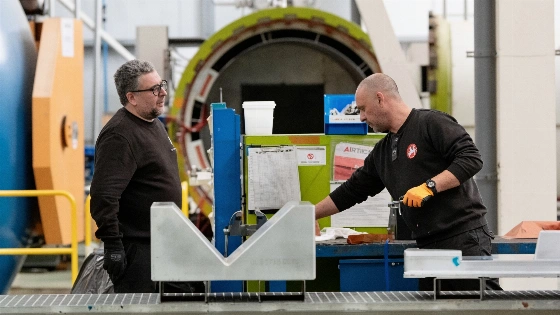
This installation stands out for its flexibility. The line will handle several product variants for both European and North American markets. All of this happens in one streamlined process. The system uses 15 robotic arms. The sequence starts with plasma surface treatment for better adhesion. Then come thermal and sealing steps, electronic part encapsulation, automated PCB assembly, and high-torque screwing. Each unit faces strict leak and high-voltage tests before it leaves the line. That ensures safety and performance. Industry sources have confirmed the use of robotic manipulators and advanced sealing and assembly operations in this project.
Automation does not stop at assembly. Custom pallets and tools move parts between stations. RFID and QR code systems track every detail in real time. All data feeds straight into the plant’s manufacturing execution system (MES). This gives full traceability. Such integration is now seen as essential for quality and regulatory checks in the EV sector. Still, independent publications have not confirmed every detail—like the 36-second cycle time, OEE targets, or the full scope of MES integration.
This is Airtificial’s second international auto tech contract in just one week. The company also won a project in India days earlier. CEO Guillermo Fernández de Peñaranda said, “these two international operations in barely a week reflect the global market’s positive reception of our technological capabilities and our competitiveness in transferring technology developed in Spain to major industrial markets such as India and the United States.” He added that geographic reach and a focus on high-value projects are key to the group’s ongoing transformation. The company remains anchored in sectors like defense, aviation, infrastructure, and industrial automation. Bolsamanía noted that Airtificial says both contracts fit its strategy of chasing complex international projects and growing its Intelligent Robots division.
Following the announcement of the US contract, Airtificial’s shares rose by approximately 4% at the start of trading, with some reports noting an increase of over 6% during the session, reflecting positive market sentiment.
The global race to electrify transport is heating up. Automakers and suppliers are pouring money into new lines and digital traceability. As reported earlier, Renault’s €600 million investment in Spain shows how manufacturers are retooling for electric cars. Both Spain and the US are pushing for leadership in next-generation vehicle production.
This latest contract is more than a business win for Airtificial. It shows Spanish engineering is earning trust in the world’s toughest auto markets. The company’s advanced, flexible automation puts it in the running as electric mobility evolves. As factories shift to smarter, faster production, Airtificial’s momentum points to a bigger role for Spanish tech in global transport.