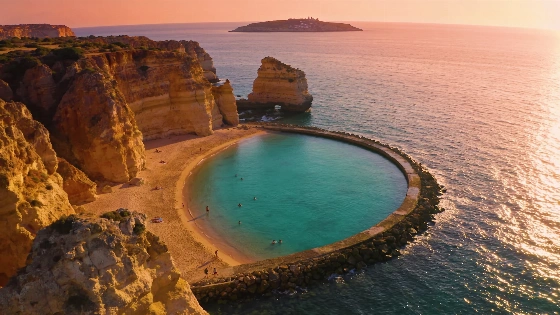
Cala de Los Cocedores, on the Almería-Murcia border, is a small bay where calm, clear waters meet sculpted cliffs. This natural pool is a favorite for families and sunset seekers, offering a rare blend of tranquility and striking scenery away from Spain’s crowded urban beaches.
On the edge of Almería, just steps from the Murcia border, Cala de Los Cocedores draws visitors with its crescent-shaped bay, crystalline waters and rugged rock formations. Tucked away near the town of Pulpí, this 150-metre stretch of sand is shielded from the open sea by natural cliffs, creating a sheltered pool that feels far removed from Spain’s busier coastal hotspots.
The cove’s unique geography is its greatest asset. The surrounding cliffs, carved by centuries of wind and water, form a natural barrier that keeps the sea calm even when the Mediterranean is restless. This makes the bay especially popular with families and anyone seeking a safe, gentle place to swim. The fine sand and shallow entry add to its appeal, particularly during the heat of summer when the area fills with locals and visitors alike.
Natural Pool and Cliff Formations
What sets Cala de Los Cocedores apart is the sensation of swimming in a natural pool, with the sea’s transparency revealing every detail beneath the surface. The cliffs themselves are dotted with small caves and hollows, remnants of both natural erosion and human activity. These features not only provide shade and vantage points but also give the cove its distinctive character.
As the sun begins to set, the rocks take on golden hues, and the bay’s orientation offers some of the most striking sunset views along the Almería coast. Photographers and nature lovers often gather here in the evening, hoping to capture the interplay of light and stone that defines this stretch of shoreline.
Access and Best Times to Visit
Reaching Cala de Los Cocedores involves a short walk from dirt parking areas near the road connecting San Juan de los Terreros with Águilas. The proximity to Murcia means the cove serves as a meeting point for visitors from both regions, with the territorial boundary just a few steps away along the sand.
During July and August, the cove can become crowded, especially on weekends and in the middle of the day. For a quieter experience, early mornings or late afternoons are ideal, offering softer light and cooler temperatures. Because the area is undeveloped, it’s wise to bring water, sun protection and sturdy footwear for navigating the rocky terrain.
History and the Esparto Ovens
The name Los Cocedores comes from the historic practice of boiling esparto grass in the caves along the shoreline—a trade that once supported many local families. While the industry has vanished, traces of these old ovens remain visible in the rock, connecting today’s visitors with the cove’s working past.
From the sand, you can also spot Isla de Terreros, a volcanic islet just offshore that completes the dramatic landscape. The combination of transparent water, sculpted cliffs and distant island views makes Cala de Los Cocedores a standout destination for those seeking a quieter, more authentic slice of the Spanish coast.
For travelers interested in exploring Spain’s coastal traditions, the region’s summer calendar is rich with events—such as the medieval market in Corcubión, which transforms another seaside town with theatre, crafts and music, as highlighted in this feature on Galicia’s vibrant summer festivals.
While Cala de Los Cocedores remains relatively untouched, its growing popularity is a reminder of the enduring appeal of Spain’s lesser-known beaches—places where nature, history and community quietly converge.