Amaia Montero’s Return: Confession on Stage and Public Reaction. Amaia Montero returned to the stage with La Oreja de Van Gogh and spoke openly about her difficult years. Her confession and unexpected song choices became the main topic of discussion. The audience and social media responded vividly.
The evening in Bilbao, when Amaia Montero took the stage with La Oreja de Van Gogh for the first time in many years, became one of the most talked-about events of the Spanish musical spring. Not only because the audience had awaited this return for nearly two decades, but also because of how it unfolded: marked by personal revelation, unexpected musical gestures, and a fervent reaction from the crowd.
The stage and the confession
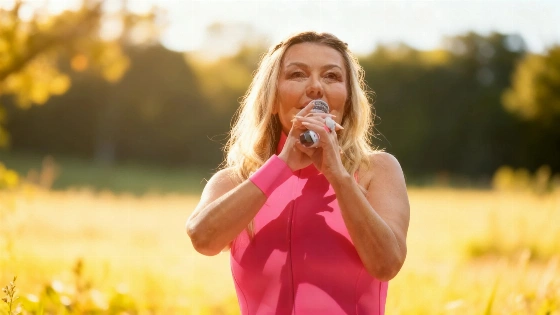
From the very beginning of the concert at Bizkaia Arena, it was clear: this wasn't just another performance, but a moment destined to become part of the band's history. Amaia Montero didn't limit herself to performing hits—she chose to have a candid conversation with the audience. At one point, the singer stopped and, barely holding back her emotions, admitted that during her years away from the stage, she endured a difficult period when it seemed that music and life itself had ended for her. According to Amaia, she felt lost and doubted she could ever return to what once gave her life meaning.
Musical bridges and audience reaction
Particular attention was drawn to the moment when Amaia performed 'El último vals'—a song the audience was accustomed to hearing performed by Leire Martínez. This gesture became symbolic: as if the singer was reaching out to bridge the group's past and present, erasing the boundaries between different eras of La Oreja de Van Gogh. The classics 'Rosas' and '20 de enero' stirred a wave of nostalgia among the audience, with the entire crowd joining in a unified chorus.
Ovations and criticism
However, not everything went flawlessly. On social media, especially on X, comments quickly appeared pointing out that Amaia's vocals at times did not sound as confident as fans had expected. Some compared her to Leire, noting differences in delivery and vocal power. Amaia herself did not hide that things weren’t perfect: after one of the new songs, she smiled and admitted performing on the high platform was a challenge, and invited the audience to share that moment with her. The band supported her on stage, and the hall responded with applause, showing that for many, emotion and honesty matter more than technical perfection.
Context and discussion
Amaia Montero's return has become not only a musical event, but also a personal one, discussed far beyond fan circles. As noted by Divinity, the evening became a kind of turning point for the singer — with new meanings, old wounds, and the support of thousands of people. In the Spanish show business world, such admissions always resonate: the public values not only success, but also the vulnerability of artists. Incidentally, in recent years, Spanish celebrities have been speaking more openly about difficult times — as Borja Semper recently did, sharing how his life changed after illness (his candor also sparked a wave of support).
In the end, despite criticism and comparisons, Amaia Montero’s return with La Oreja de Van Gogh became one of the year’s most notable events. This is a story not only about music, but also about the power of acknowledgment, the ability to be honest with oneself and the public — and how the stage sometimes becomes a place for new beginnings.