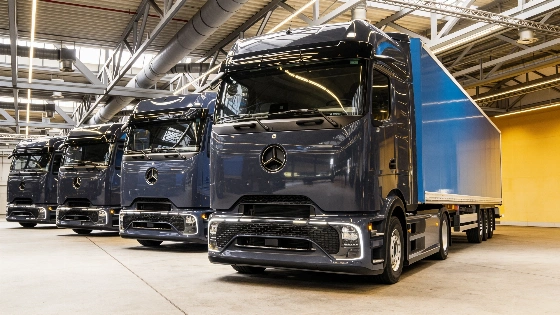
Amazon is adding 50 Mercedes eActros 600 electric trucks to its German logistics network, a major step in shifting heavy transport away from diesel. The move deepens the partnership between Amazon and Mercedes-Benz Trucks.
Amazon’s logistics network in Germany is getting a major update. The company has started using 50 Mercedes-Benz eActros 600 electric trucks, with 27 already delivered and the rest expected by year’s end. These trucks are not part of a test run—they’re now moving goods on Amazon’s main distribution routes across the country. Both Amazon and Mercedes-Benz Trucks say that by the end of 2026, more than 50 eActros 600 trucks will be in regular service on German roads, marking a real expansion of electric heavy-duty transport.
The eActros 600 is built for medium-haul logistics. Each truck has a 621 kWh battery made up of three lithium iron phosphate modules and can travel about 500 kilometers on a single charge. Mercedes-Benz designed the trucks for quick charging during required driver breaks, so a single vehicle could cover over 1,000 kilometers in a workday—performance that matches many diesel trucks. These details come from Mercedes-Benz Trucks and industry reports.
The contract for over 200 eActros 600 trucks for Amazon in Germany and the UK is the company’s largest electric truck order to date.
Amazon’s investment in these trucks is part of a larger effort to cut emissions across its European transport network. The company has set aside more than 400 million euros for Germany alone, covering not just vehicles but also charging stations and other logistics upgrades. According to Amazon, this is a key part of its plan to modernize and reduce the carbon footprint of its operations in Europe.
The eActros 600 trucks will handle the "middle mile," moving large shipments from Amazon’s main logistics centers to regional hubs near major cities. Smaller vehicles then take over for last-mile delivery. Both Amazon and outside analysts highlight this middle-mile focus as a way to connect major logistics points efficiently and with lower emissions.
This rollout in Germany follows an earlier agreement between Amazon and Mercedes-Benz to supply over 200 eActros 600 trucks for the UK. By expanding to Germany, the companies are pushing further into electric heavy transport on Europe’s busiest freight routes. Reports from Amazon and industry media say about 140 of these trucks are headed to the UK, with around 50 for Germany.
Mercedes-Benz began production of the eActros 600 at its Wörth plant in late 2024, positioning the model as its flagship electric long-haul truck. The company is also investing in the development of charging infrastructure, with Amazon announcing the rollout of hundreds of truck charging points across Europe to support regular operations.
For Mercedes-Benz Trucks, launching the eActros 600 is a major step. Production started at the Wörth plant in late 2024, and steady deliveries to clients like Amazon show that electric heavy-duty trucks are ready for real-world use. Amazon’s adoption of these vehicles signals that the technology is moving beyond the prototype stage.
Other tech companies are also looking at the European electric vehicle market—Xiaomi, for example, has announced plans for Germany—but Amazon’s move stands out for its scale and speed. The company is investing heavily now, aiming for both environmental and business benefits.
For Amazon, moving goods efficiently and with lower emissions is a competitive edge as regulations tighten and customers expect more sustainable options. For Mercedes-Benz, each successful delivery helps build its reputation in zero-emission freight. The real test will be whether these trucks can match the reliability and costs that large logistics companies need. If they do, diesel’s days in European road freight could be numbered.