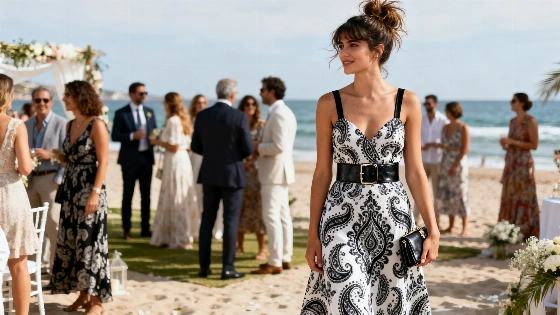
Ana Boyer's appearance at Sara Verdasco's wedding in Madrid drew attention for its understated elegance. Her custom Antonio García dress, blending pastel tones, set a standard for timeless guest style.
In June 2016, the wedding of Sara Verdasco and Juan Carmona in Boadilla del Monte became a focal point for Madrid's social scene, gathering 300 guests including well-known figures from music, film, and sports. Yet, it was Ana Boyer who captured the spotlight among attendees, not only for her connection to the Verdasco family but for her distinctive approach to wedding guest style.
Boyer, then attending as Fernando Verdasco's partner, chose a custom gown by Antonio García. The dress, designed exclusively for her, featured a floor-length pleated skirt and a delicate palette of celeste, nude, and white. The inclusion of white—a color often avoided at weddings—was carefully balanced, adhering to the unwritten rule that white should not dominate more than 30% of the outfit. This nuanced choice allowed Boyer to stand out without breaching etiquette, a move praised by designers for its subtlety and restraint.
The look was described by Carmen de la Puerta, founder of Vogana, as both classic and romantic, achieved through soft pastel shades, airy fabrics, and a fluid silhouette. Boyer's style, marked by clean lines and neutral tones, has become her signature over the years. She consistently favors refined, wearable silhouettes and understated accessories, a preference shaped in part by her mother, Isabel Preysler, long regarded as a benchmark of Spanish elegance.
Nearly a decade later, Boyer's ensemble remains relevant. Its lack of bold prints, exaggerated volumes, or statement accessories has helped it withstand changing trends. While some might debate the choice of white shoes, the overall effect is widely seen as harmonious and modern. The look demonstrates that elegance at formal events does not depend on excess decoration, but on thoughtful design and proportion.
On the same day, the bride, Sara Verdasco, wore a classic gown by Rosa Clará. The dress featured a bateau neckline, fitted bodice, and French sleeves, with a standout V-shaped back adorned with hand-embroidered silver thread and crystals. The silk cloqué fabric and a three-meter train added to the traditional feel. Sara completed her look with a four-meter plumetti tulle veil, secured by a unique brooch crafted by Suarez jewelers, set with 120 diamonds and a blue sapphire from Madagascar.
Weddings among prominent families often become showcases for evolving fashion codes. The understated approach seen at Sara Verdasco's ceremony echoes a broader trend in European high society, where subtlety and personal style are increasingly valued over ostentation. This shift was also evident at recent royal events, such as the state banquet in Brussels attended by Princess Elisabeth, where classic elegance took center stage. For more on how European royals are redefining formal style, see this report on Princess Elisabeth's debut at a state banquet with Japanese dignitaries.
In Spain, the influence of figures like Ana Boyer and Isabel Preysler continues to shape expectations for public appearances at major events. Their choices highlight a preference for timeless design, careful color selection, and a balance between tradition and modernity. As formal gatherings remain central to Spanish social life, the lessons from these high-profile weddings offer a reference point for guests seeking to navigate the evolving codes of elegance.