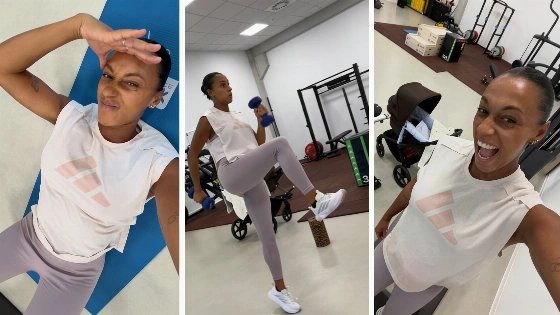
Ana Peleteiro has resumed training less than two weeks after giving birth. The decision, made with medical guidance, highlights her focus on the 2027 European Championships. Her rapid return raises questions about postpartum recovery in elite sport.
Spanish triple jumper Ana Peleteiro has resumed her athletic training just 13 days after the birth of her second child, marking one of the fastest returns to elite sport seen in recent years. The decision, made in close consultation with her medical and physiotherapy team, has drawn attention both for its speed and for the careful planning behind it. Peleteiro, who shared the news on her social media channels, emphasized that her comeback was guided by professional advice and tailored to her individual recovery process.
Peleteiro described her initial sessions back on the track as exceeding her own expectations, noting that she did not anticipate such a positive postpartum experience or the ability to return to physical activity so soon. She acknowledged that her early return might prompt debate, but stressed that every woman's recovery after childbirth is unique. According to her, all steps are taken with caution, and her team monitors her progress closely to ensure her well-being at each stage.
The athlete made it clear that this early start to training is not improvised. Instead, it is part of a structured plan developed with her support staff, including Benjamin Compaoré, the team led by Crys Dyaz, and physiotherapist Pablo Queiruga. Peleteiro expressed gratitude for their expertise, underlining that her approach is based on discipline and a clear focus on long-term goals. She pointed out that, for her, beginning work immediately is essential to achieving the targets she has set for the coming seasons.
Peleteiro's main objective is the 2027 European Championships in Valencia, which she has identified as the central challenge of her new season. The announcement comes at a time when the topic of postpartum recovery in elite sport is increasingly visible, with athletes and medical professionals discussing the balance between ambition and health. Her statement, "Quien algo quiere, algo le cuesta," reflects the determination required to compete at the highest level while managing the demands of motherhood.
Her rapid return to training stands out in the context of ongoing debates about athlete welfare and the pressures faced by sports professionals. The issue of how quickly athletes should resume intense physical activity after childbirth remains complex, with no universal guidelines and significant variation depending on individual circumstances. This discussion echoes broader conversations in Europe about health, recovery, and the responsibilities of sports organizations, similar to recent policy considerations such as the European Commission's review of age restrictions on digital platforms for minors, as reported in Brussels' ongoing efforts to address youth mental health and digital safety.
In Spain, Peleteiro's case may influence how postpartum recovery is viewed in both professional and amateur sports. While her experience is highly individual, it highlights the importance of personalized medical supervision and the evolving standards for athlete care. The 2027 European Championships in Valencia are set to be a major milestone, not only for Peleteiro but for Spanish athletics as a whole, as the country prepares to host one of the continent's most prestigious sporting events.