Women Behind the Wheel: How Spain's Transport Sector Is Changing. In Spain, the profession of truck driver has traditionally been considered a male domain. But staff shortages and generational change are opening doors to new faces. The story of 22-year-old Andrea shows how the industry is evolving—and what stereotypes young women still face.
In Spain, the truck driver profession has for decades remained a symbol of men's work: long hours behind the wheel, frequent trips, and great responsibility have shaped a stable image in which women were considered the exception rather than the rule. However, today the transport sector faces an acute shortage of young specialists, and this is gradually shifting traditional boundaries.
According to Talent24h, about 96% of truck drivers in the country are men. Women still make up a small minority, and the average age of most workers exceeds 55. This poses a serious challenge for the sector’s future: without an influx of new staff, the stability of freight transport is under threat.
A generational gap
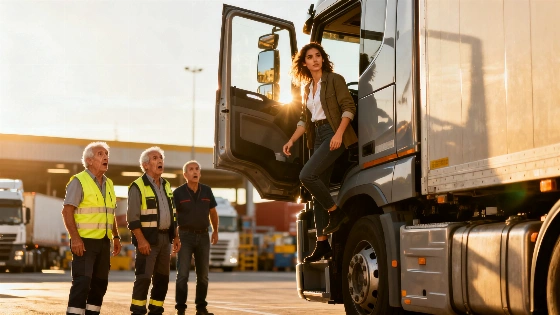
The problem of generational change in the transport industry is becoming increasingly evident. Young people rarely choose this profession, despite stable income and the promise of independence. For Andrea, a 22-year-old truck driver, these arguments were decisive: she emphasizes that the job gives her financial independence and confidence in the future.
According to Talent24h, interest in the profession among young people is growing, but equality is still far off. Women who decide to devote their lives to transport face not only everyday challenges, but also prejudice.
Stereotypes and reality
Andrea notes that she feels comfortable within her own company: colleagues treat her with respect, and her professionalism is never in question. But the situation changes when it comes to interacting with external organizations—at warehouses and logistics centers. There, she has often been asked why there is a woman behind the wheel of a truck and has faced skepticism.
One of the incidents she recalls is when a man at a warehouse asked where the driver was and why she was the one operating the vehicle. Andrea calmly replied that she is no different from other employees and that her choice of profession should not be surprising.
Motivation and prospects
For young women considering the transport sector, not only financial conditions are important, but also opportunities for professional growth. Andrea believes that women can bring new qualities to the profession: precision, attentiveness, and a knack for detail. She thinks these skills are often in demand in difficult situations on the road and when working with machinery.
Among the reasons why young people choose the profession of truck driver, Andrea highlights stable employment, decent pay, and an interest in automotive topics. She is convinced that her example can inspire other women to try themselves in this field.
Plans for the future
Andrea is making career plans based on her personal priorities. She would like to continue driving until the age of 30, and then move into a dispatcher or logistics manager position to gain more stability and time for her family. At the same time, she does not rule out returning to driving if the opportunity arises.
Andrea's story is not an isolated case, but a reflection of slowly yet steadily changing trends in Spanish society. The question of how many more young women will choose to enter this traditionally male-dominated profession remains open. But it is clear that the transport sector needs new personnel and is ready to change.
It's significant that similar processes of renewal and search for new solutions are taking place in other areas as well. For example, the discussion about bottle deposit return in Spain, as noted by an analysis by russpain.com, is also related to the need to adapt to modern requirements and societal expectations.