After a student died on a school trip, Aragón introduced Spain’s first law on extracurricular activities. School leaders and unions say the measure falls short and leaves teachers exposed. The future of trips and activities is now in doubt.
Aragón’s effort to regulate extracurricular activities has met strong pushback from school leaders, who say the new rules do little to protect teachers from legal risk. The law was introduced after the death of 17-year-old Mario Conesa on a school trip, but instead of easing concerns, it has left many educators unconvinced. Some schools have decided not to resume trips or activities at all.
The regulation, published as order ECU/1254/2026, followed months of anxiety in the education sector. In March 2022, Mario Conesa, a student at Instituto Público Ítaca in Zaragoza, died during a study trip to Hasselt, Belgium. He became ill, was left alone in the hostel while others went out, and was later found dead after a fatal fall. Two teachers are set to stand trial in January, accused of gross professional negligence and facing up to four years in prison if convicted.
The regional government has stated that the current regulation is only a transitional measure, with plans to collect feedback during the 2026/27 school year and develop a more comprehensive law later.
The legal case sent shockwaves through Aragón’s schools. As soon as the teachers were charged, nearly a hundred schools—especially in Zaragoza—cancelled all extracurricular activities and trips. Ítaca, Mario’s school, was the first to act. Others quickly followed, demanding clear rules about their responsibilities outside the classroom.
Under pressure from unions, parents, and school associations, the regional government introduced the new regulation in August. It sets minimum teacher-to-student ratios for trips, requires at least two teachers per outing, and mandates a 12-hour rest period after activities. Participation is voluntary for both students and teachers. The law clarifies that civil liability is covered by the administration, while criminal liability is limited to cases of intent or gross negligence.
But school directors say the regulation is vague and does not give teachers the legal certainty they need. Guillermo Sánchez, head of the directors’ association, calls the law "subjective" and insufficient, warning that staff now have to make decisions about risk and protocols without proper training. Unions share these concerns, arguing that the extra paperwork may discourage teachers from organizing activities at all.
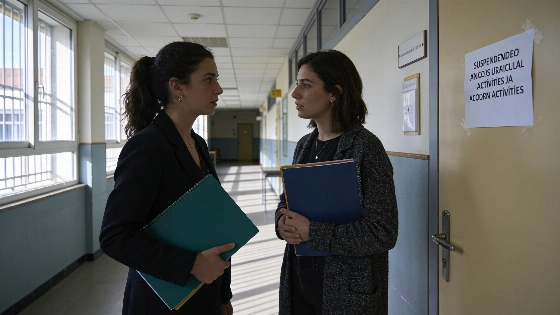
Regional media report that at least 15 schools have officially notified families about the complete suspension of extracurricular activities, and opposition parties claim that over 2,000 student places in Pyrenean activities have already been cancelled, causing losses for local transport and hospitality businesses.
Opposition politicians have also criticized the measure. Socialist deputy Jorge Pastor dismissed the law as a "mouse" that offers no real protection or extra resources. Gema Tomás of CSIF and Esmeralda Gómez of UGT both argue that the regulation simply repeats existing rules and does not address the problems that led to the crisis.
Education councillor Carmen Susin says teachers already have legal support and that demands for criminal immunity are beyond the regional government’s authority. She points out that only the national parliament can change the penal code, and warns against creating false expectations about what the regional law can do.
Despite the new rules, more than a dozen schools have voted to keep extracurricular activities suspended. The uncertainty now threatens not just educational opportunities but also local economies that depend on school trips, such as Aragón’s ski resorts. The upcoming "Semana Blanca" ski campaign, which usually brings thousands of students, is now at risk.
Other Spanish regions have faced similar problems, as seen in previous incidents where unclear safety standards led to mass cancellations and public criticism.
Aragón is the first region in Spain to regulate extracurricular activities, but the backlash highlights a deeper issue: legal uncertainty and bureaucracy are pushing teachers away from trips and projects that once enriched school life. Unless lawmakers address the core problems—clear liability, practical support, and realistic expectations—schools are likely to keep opting out, and students will lose out on valuable experiences. The government’s quick response has not solved the underlying crisis, and the region now faces the challenge of matching policy to the real risks and responsibilities schools face.