Audi has introduced the A2 e-tron, a fully electric compact that drops the classic Single Frame grille and offers up to 646 km on a single charge. With four power options and a starting price above 37,000 euros, Audi is focusing on efficiency and technology rather than just power.
Audi has taken a different approach with the new A2 e-tron, leaving behind the familiar Single Frame grille and pushing for more range, efficiency, and a higher price point in the compact electric segment. The top version claims a WLTP range of 646 km, putting pressure on competitors and raising the bar for what buyers can expect from a compact EV.
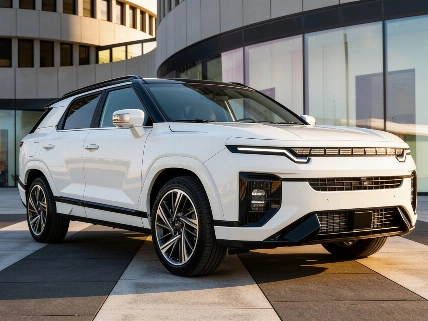
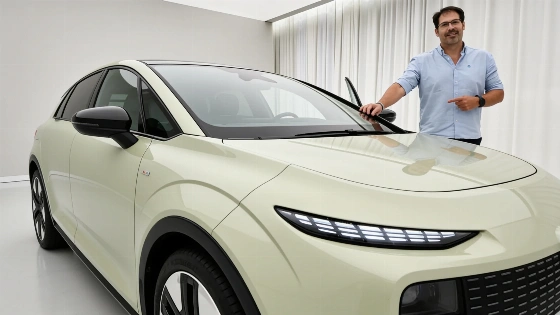
At 4.32 meters long, the A2 e-tron is no longer a quirky city car. It has a longer wheelbase, short overhangs, and a body shaped for aerodynamics. The front end is a clear departure: headlights and sensors are set into a smooth black panel, with no sign of the grille that defined Audi’s look for years. This isn’t a design shift for the whole lineup, but a choice to improve efficiency on this model.
According to data from the German Federal Motor Transport Authority, the share of electric vehicles in new car registrations in Germany reached 18.4% in 2023, highlighting the growing importance of efficient EVs like the A2 e-tron in the European market.
Inside, Audi has gone for a warmer, more tactile feel. Much of the dashboard and doors are covered in Softwrap textile, with recycled materials and subtle stitching to boost perceived quality without clutter. The cockpit comes standard with an 11.9-inch Audi virtual cockpit plus and a 12.8-inch MMI touchscreen. Options include a 30-color ambient lighting system, a 660-watt Sonos audio system, and an augmented reality head-up display. Moving the gear selector to the steering column frees up the center console, making space for a cooled Qi 2.2 wireless charging pad that can charge two phones at once with up to 25 watts and magnetic attachment.
Rear passengers get the benefit of the long 2.77-meter wheelbase and a low battery, which means good legroom. The boot holds 396 liters, or 1,336 liters with the seats folded. The higher-powered versions (170 and 240 kW) add a 13-liter front compartment for cables, which the entry models lack.
Efficiency first
Audi’s focus is on efficiency, not just power. The A2 e-tron’s lowest official consumption is 12.8 kWh/100 km, and the drag coefficient is 0.24. There are four rear-wheel-drive versions: 125 kW (170 hp), 140 kW (190 hp), 170 kW (231 hp), and 240 kW (326 hp). The first three have 350 Nm of torque, while the top model has 545 Nm and accelerates from 0 to 100 km/h in 5.7 seconds, with a top speed of 200 km/h.
Sustainability is a key focus for Audi: according to the company’s official sustainability report, the A2 e-tron is produced at a facility that uses 100% renewable electricity, and Audi aims to achieve net carbon neutrality across its European production sites by 2025.
Battery choice matters. Audi offers three packs: 52, 61, and 84 kWh gross. The two smaller batteries use LFP chemistry, while the largest uses NMC cells. Official ranges are 423, 515, 646, and 630 km depending on the version. The 170 kW model gets the longest range, while the 140 kW version is the most efficient. Fast charging peaks at 100, 105, or 183 kW depending on the battery, with a 10–80% charge taking 24 to 29 minutes. While 183 kW is solid, it’s no longer the fastest among new electric cars.
Bidirectional charging is standard, with V2L for powering external devices and V2H for home energy storage. The chassis offers four drive modes, three levels of regenerative braking via paddles, and a ‘One pedal’ B mode for city driving.
Tech and everyday use
Practicality gets attention too. The A2 e-tron’s door handles use haptic sensors and have a backup power supply so you can get in even if the main system fails. The Fidlock system uses magnets and mechanical locks to secure cupholders, bags, or straps at three points in the cabin and up to three more in the boot. It’s an unusual detail, but shows Audi is thinking about daily use.
Navigation and connectivity are handled by the e-tron route planner, which takes into account traffic, topography, and charging power. The Audi assistant, powered by AI, allows natural language commands for navigation, music, and vehicle functions. These features are now expected at this price, but Audi’s version is well executed.
Pricing is firmly in premium territory. The base 170 hp model starts at 37,760 euros, rising to 41,460 for 190 hp, 47,360 for 231 hp, and 56,640 euros for the Black Line 326 hp flagship. This is a clear step up from previous compact models from Audi.
Market and competition
The A2 e-tron enters a crowded field. The Volkswagen ID.3 Neo claims up to 628 km, the Cupra Born offers 631 km and 326 hp, and Volvo’s EX30 Long Range manages 475 km. On range and charging, Audi’s new model is competitive, but its pricing is more ambitious than before. Buyers will have to weigh Audi’s focus on efficiency and tech against the higher cost.
Regulations are also shaping the market. As reported earlier, Spain has tightened vehicle inspections and emissions checks under Euro 7 rules, making efficient electrics like the A2 e-tron more appealing for drivers who want to future-proof their purchase.
With the A2 e-tron, Audi isn’t chasing power figures or old design cues. Instead, the brand is betting that real-world range, useful tech, and a premium feel will attract buyers left out by the end of the A1 and Q2. Whether that works will depend on how much buyers value range, daily convenience, and the Audi badge—especially now that the badge sits on a car without the familiar Single Frame grille.