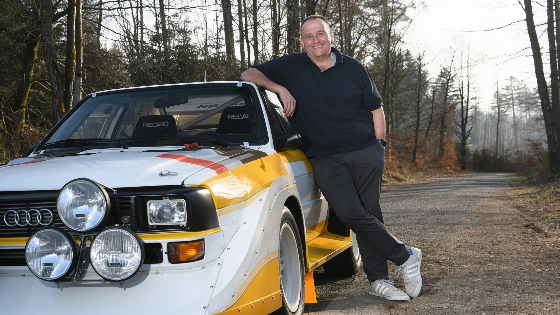
The Audi Sport quattro S1, once driven by Walter Röhrl, brings back the wildest days of Audi. As the brand tries to chase lost excitement with new concepts, this Group B icon shows what today’s models are missing.
When the Audi Sport quattro S1 starts up, you feel it right away. The engine spits out oil smoke. The five-cylinder snarls. The car takes control, not the driver. It doesn’t welcome you. It barely lets you in, squeezing you into a bare cockpit where the car’s purpose is clear and unforgiving.
Forty years after its Group B peak, the S1 still sits at the heart of the Loh Collection’s rally legends. It’s not just a piece of nostalgia. It stands in sharp contrast to the safe, predictable Audis now filling showrooms. Today’s lineup is packed with SUVs and electric sedans. The wild energy that once made Audi famous is gone. The S1, though, is proof of a time when “A la vanguardia de la técnica” meant more than engineering. It meant guts. Sometimes, it meant recklessness.
Audi Sport quattro S1 E2 is regularly featured as a centerpiece at Audi’s anniversary and historical showcases, underlining its status as one of the most radical rally cars of the 1980s.
Driving the S1 is tough on the body. The tubular frame bangs your elbows. The narrow seat and four-point harness squeeze your chest. The turbo engine needs high revs before it lets loose all 530 CV. There’s no gentle build-up. Power hits all at once, throwing the car forward. Gear changes feel like explosions. Walter Röhrl, who once owned this car, called it “explosions”—and he was right. The S1 doesn’t just go fast. It attacks the road.
Even at speeds that would scare most drivers, the S1 feels almost unreal. It hits 100 km/h in under three seconds. It reaches 200 in ten. These numbers are wild, even now. The sound is chaos—five cylinders thumping, turbo whistling, and the gurgle of extra air. Every second behind the wheel reminds you: this car, now worth millions and the star of the exhibit, won’t forgive mistakes.
The S1’s design is as raw as its drive. Its wheelbase is 30 centimeters shorter than a standard Quattro. The body flares out like a fighter. The rear wing looks like it belongs on a plane. Lightweight build, turbo power, and all-wheel drive didn’t just win races. They changed motorsport. Group B rules only asked for 200 road cars to get approval. That gave engineers room to go wild.
According to recent coverage by leading automotive media, Audi continues to highlight the S1 E2 alongside its Le Mans prototypes and other racing icons at major exhibitions, reinforcing its role as a central symbol of the brand’s sporting heritage. The car is also recognized as a rare collector’s item and a key piece in demonstrating Audi’s motorsport legacy.
Friedhelm Loh, the museum director, calls this era “madness turned into an automobile.” Drivers and co-drivers were more like animal tamers, barely holding these wild cars back. The FIA let this chaos run for five years. Then fatal crashes forced a stop. What’s left is a legend bigger than any single race. Röhrl’s win at the 1985 Rallye San Remo and his record Pikes Peak climb in 1987—reaching the top in 10:47.850—are now part of racing history.
Modern Audi concepts like the Nuvolari and Concept C try to bring back some of that old spirit. They mix strong engines with electric tech and clean design. But for those who remember the S1, these new cars feel like one-off gestures, not a real comeback. The gap between what Audi once risked and what it now builds is clear.
When the S1 goes back on display, gravel still stuck to its tires and the sound of its turbo fading, the difference with today’s cars is obvious. The S1’s legacy isn’t just speed or engineering. It’s about taking risks and chasing real emotion. Audi’s current path may be steady, but the S1 shows that greatness sometimes needs a bit of madness. For more on how high-performance cars still make headlines, check out this recent report on automotive passion at the top of the market.