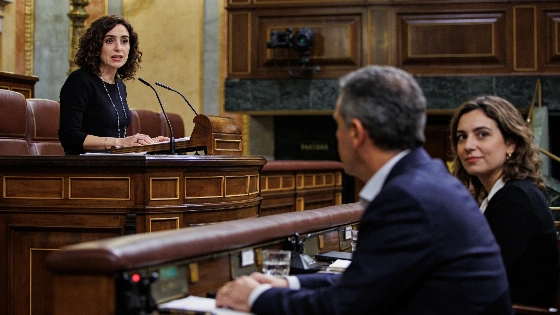
Mar Espinar has used the dispute over the strike to accuse Madrid’s regional government of systematically diverting public money to Quirón while Isabel Díaz Ayuso benefited from living in a luxury penthouse. The PSOE spokesperson made the claim in response to Ayuso’s attack on the organisers.
Ayuso had referred to the organisations as “basura sindical” ahead of the general strike, provoking an uproar. The nationwide stoppage ran for 24 hours, from midnight on 11 November through 23:59, and covered public- and private-sector workers. CCOO, UGT, CGT and CNT backed the call, while CSIF, USO and Fetico did not support it. The unions’ demands included higher wages, shorter working hours, action against precarious employment, price controls and improved access to housing. Legally mandated minimum services remained in place in strategic sectors including transport, energy and banking. The strike brought tens of thousands of people onto the streets, though participation was uneven and the stoppage was not described as massive. Ministers cleared their schedules and the Government encouraged participation; Ayuso and the PP dismissed the action as a sham.
The Assembly’s Thursday plenary comes with the general election scheduled for 29 November. The PP says the strike was a failure and presents it as a precursor to an electoral defeat for the PSOE. The campaign has also featured public demonstrations, including a Madrid pension march.
Espinar’s response focused on the allegation involving Quirón, while the PP’s criticism centred on participation in the strike. A separate, indefinite education strike in Madrid, which began on 14 October, was also continuing. On 11 November, the regional government announced expanded minimum services for that dispute, with particular reinforcement for second-year Bachillerato classes and preparation for the university-access examination, the PAU. The parties’ positions reflect the return of left- and right-wing alliances in the Assembly as the election approaches. Competition between Más Madrid and Vox had blurred those alignments in regional debates, but the blocs are now taking up their more familiar opposition roles.