Former Prime Minister Aznar arrived in Ceuta as tensions between residents and migrant youths intensify. Nearly 9,000 police and military personnel are working to prevent further unrest. The situation remains volatile.
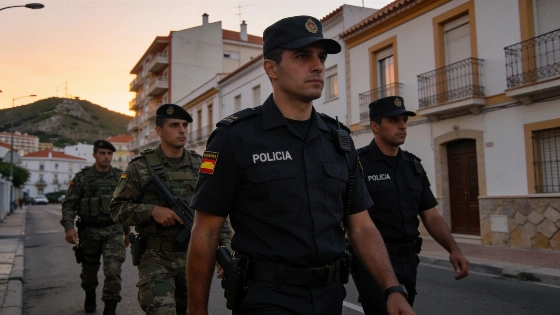
Ceuta is experiencing a sharp escalation in tension as former Prime Minister Aznar made a high-profile visit to the autonomous city. His arrival comes at a time when the atmosphere on the streets is increasingly strained, with security forces under mounting pressure to prevent further deterioration in public order. The deployment of nearly 9,000 police officers and military personnel highlights the seriousness of the situation, as authorities attempt to contain a city that feels on the brink of unrest.
Security teams are not only patrolling the streets and shelters but are also moving constantly across Ceuta, responding to incidents and trying to defuse conflicts before they escalate. On one side, local residents are showing growing frustration, while on the other, groups of young Moroccan migrants have been reported taking advantage of the night, the coastline, and the surrounding hills to evade detection and, at times, confront law enforcement. The dynamic has created a sense of a city divided, with each side wary of the other and the risk of confrontation never far away.
Recent incidents have further heightened concerns. According to local reports, some migrant youths have attacked security personnel, using the cover of darkness and the city’s geography to their advantage. The authorities are working to prevent these isolated events from sparking wider unrest, but the atmosphere remains tense. The situation is complicated by the sheer number of people involved and the logistical challenges of maintaining order across Ceuta’s varied neighborhoods and terrain.
In this context, Aznar’s statement that “national sovereignty does not take holidays” has resonated with many, reflecting the gravity of the current moment. His visit is seen as both a show of support for the security forces and a signal to the public that the government is closely monitoring developments. The presence of such a large contingent of police and military personnel is intended to reassure residents, but it also underscores the scale of the challenge facing the city.
Ceuta has faced repeated waves of migration and related tensions in recent years. The city’s unique position on the border with Morocco makes it a focal point for both migration flows and political debate. As noted in a recent report on the government’s response to previous migration surges, the status of Ceuta and the role of the armed forces remain sensitive issues at the national level. The current deployment is among the largest in recent memory, reflecting both the immediate security needs and the broader political significance of the city.
For context, Ceuta is one of Spain’s two autonomous cities on the North African coast, alongside Melilla. Its strategic location has long made it a point of entry for migrants seeking to reach Europe, and the city has periodically experienced spikes in arrivals that strain local resources. The Spanish government has responded with a combination of increased security, diplomatic engagement with Morocco, and efforts to transfer vulnerable groups to the mainland. The ongoing situation in Ceuta is being closely watched across Spain, as it raises questions about border management, integration, and the balance between security and humanitarian concerns.