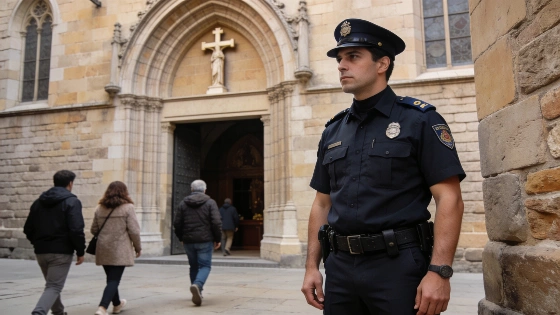
A Barcelona priest remained in his parish for months after abuse warnings reached Archbishop Omella. The Church acted only after police intervened, raising questions about internal accountability and its handling of abuse allegations.
Months before police arrested priest Jorge Alexander P. on suspicion of sexually abusing both an adult and a minor, the Archdiocese of Barcelona had already received detailed warnings about his behavior. Despite direct testimony and explicit evidence, Archbishop Juan José Omella did not remove the priest from his post, leaving him in charge of the Mare de Déu de Montserrat parish until law enforcement stepped in.
The situation changed in November 2024, when Mossos d’Esquadra detained Jorge Alexander P. after new complaints surfaced. By then, the priest was still leading the parish in Barcelona’s Guinardó district, even though a victim had described explicit abuse and shown video evidence to Church officials. The Church removed him only after the case became public and a judicial investigation began.
As of September 2026, Archbishop Omella remains in charge of the Barcelona Archdiocese, despite having reached the formal retirement age, and no successor has yet been appointed.
Documents reviewed by EL PAÍS show that the first warning came more than two years earlier. In a personal meeting, the victim, identified as J., told Omella that the priest had engaged in non-consensual sexual acts and showed him a video of the priest masturbating during a call with another adult. The Archdiocese classified the complaint as a "moral issue" between adults and referred the priest to a Jesuit psychologist, but did not open a formal investigation or remove him from ministry.
J. later filed a formal complaint with the Church’s victim support service, SAVA, saying he had initially avoided going public to protect the Church’s image. He criticized Omella for downplaying the case, recalling that the archbishop described it as "one person’s word against another’s" and offered only spiritual advice, not psychological support. J.'s frustration grew after he heard new rumors about the priest, leading to a second meeting with Omella in September 2024. During this conversation, which J. says he recorded, Omella admitted he still had doubts about the priest, saying, "I have always had an unanswered question about this priest."
Information from the vicaría judicial, Omella had previously confronted the priest about the video, and the priest admitted to the act and expressed regret. The psychologist involved suggested the incident might be an "anecdote," and the Church took no further action. Only after J. submitted a written complaint did Omella encourage him to file with SAVA; Omella also edited the letter to avoid any suggestion of a cover-up.
Recent Spanish media reports confirm that public discussion about Omella's possible replacement has intensified since September 2026, with outlets like El Mundo and Infovaticana reporting that the Vatican has yet to make a final decision on his succession. This ongoing uncertainty keeps the issue politically and ecclesiastically sensitive, especially amid broader debates about Church accountability in Spain.
When J. pressed for answers through a formal burofax, the Archdiocese responded by filing a criminal complaint against him for alleged threats, a move the courts dismissed twice. After the legal cases were dropped, J. continued with his complaint, saying his goal was to prevent further victims and get support from the Church. He argued that if his warnings had been taken seriously, later alleged abuses might have been avoided.
The Church says it acted properly, citing the referral to a psychologist and the lack of a formal complaint in 2022. The victim disagrees, insisting he provided clear evidence and that the Church’s response was inadequate. The vicaría judicial now says all information has been sent to the ongoing criminal case against Jorge Alexander P.
The case fits a wider pattern. The Spanish Church has faced repeated criticism for its handling of abuse allegations, with victims often finding that Church officials act only when forced by outside authorities. As reported earlier, Church leaders have come under scrutiny for their responses to crises, whether involving abuse or other social issues.
The facts here show a pattern: even explicit evidence and internal doubts do not always lead to immediate action within Church structures. Reliance on spiritual advice and psychological referrals, without a transparent investigation or removal from ministry, leaves victims and the public with little trust in institutional accountability. Unless the Church adopts automatic suspension and independent review when credible allegations arise, the risk of further harm remains high. The Omella case highlights how institutional inertia and self-protection can still outweigh the need to protect the vulnerable.