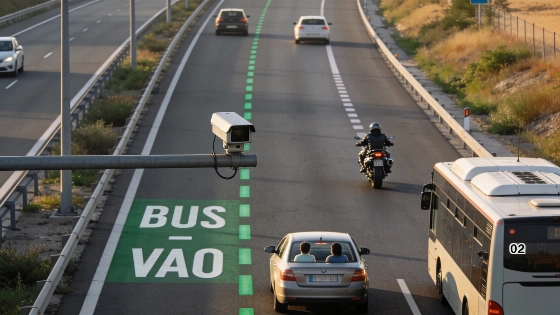
Starting 21 September, Barcelona’s X1 express bus will extend service to Zona Universitària, offering a direct route from the city centre to the university area. The launch coincides with European Mobility Week and includes rare public tours of key transport sites.
Barcelona’s X1 express bus will soon reach Zona Universitària, offering a direct route for commuters and students. From 21 September, the X1 will no longer end at Francesc Macià but continue along Avinguda Diagonal to the university district. TMB announced the change to coincide with European Mobility Week, a city initiative focused on sustainable transport and public access to infrastructure.
The extension creates a faster, more direct connection between central Barcelona—especially the Eixample and Glòries neighborhoods—and the university campus. For many students and staff, this means no more transfers or long detours, making daily travel across one of the city’s busiest routes simpler. TMB says the move responds to ongoing demand for better east-west public transport and aims to improve access for residents in Eixample and Glòries.
Registration for free guided visits to Gaudí station, Santa Eulàlia workshops, and ZAL workshops opens on 14 September via the city council website.
Alongside the route extension, TMB is using European Mobility Week to open several rarely seen facilities to the public. On the weekend of 19–20 September, people can sign up online to visit the unused Gaudí metro station, the historic Santa Eulàlia metro workshops from 1922, and the ZAL workshops in the Zona Franca. These free tours offer a behind-the-scenes look at Barcelona’s transport network, with registration starting 14 September on the city council’s website. According to Metropoli Abierta, these events are part of a broader effort to connect citizens with the city’s mobility infrastructure.
Bus enthusiasts will also find something new on Passeig de Gràcia, where TMB will display vintage buses on 18 and 19 September. This exhibition is part of the city’s push to highlight its transport heritage and modernization efforts, and it lines up with the main activities of European Mobility Week.
Barcelona’s transport system has faced growing pressure to adapt as travel patterns change and demand for efficient, sustainable options increases. The X1 extension is one step in a wider set of transport reforms. Recent disruptions from severe weather in Catalonia and other regions have also shown the need for resilient infrastructure, as reported earlier this month.
TMB has officially stated that the X1 extension will improve connections with metro, tram, and especially with intercity and metropolitan buses from Baix Llobregat, enhancing intermodality for commuters.
The X1’s new route is likely to be welcomed by many and may set a model for future mobility projects in Barcelona. Opening up transport facilities to the public during European Mobility Week points to a shift toward more transparency and civic involvement. Whether these changes lead to lasting improvements for daily commuters remains to be seen. For now, the X1 extension is a practical upgrade that should make life easier for students and workers traveling between the city centre and the university district.