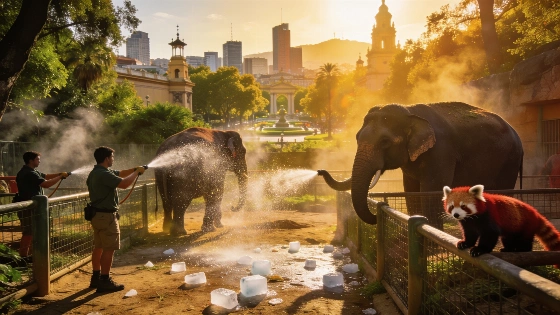
Barcelona Zoo has launched special measures to protect animals as Catalonia faces another extreme heatwave. With temperatures soaring above 40°C, the zoo is adapting hydration, food, and ventilation routines to safeguard animal welfare.
Barcelona Zoo has rolled out its summer emergency protocol as Catalonia faces yet another surge in extreme heat, with forecasts from the Catalan Meteorological Service (Meteocat) predicting temperatures above 40°C in areas like the Lleida plain. Early this morning, Barcelona itself was already nearing 30°C, compounded by high humidity, prompting the zoo to intensify efforts to shield its animals from the effects of the heatwave.
The zoo, located in the Parc de la Ciutadella and managed by the municipal company BSM, is focusing on several key strategies to ensure animal welfare during the ongoing heat. Staff have increased the number of water points throughout the enclosures and are renewing drinking water more frequently to guarantee a constant supply of fresh water. Bathing areas and mud wallows, which are vital for species such as warthogs and turtles to regulate their body temperature, are also being cleaned and refilled more often.
In addition to hydration, the zoo is adapting feeding routines by offering food in ice form, helping animals cool down while they eat. Certain species, including the red panda and the elephant, are receiving regular showers or being sprayed with hoses and sprinklers. Ventilation systems and air renewal mechanisms have been activated in some indoor enclosures to improve air quality and maintain cooler temperatures inside.
These measures are part of a broader response to the persistent heatwaves affecting Spain in recent years. The zoo’s approach reflects a growing trend among animal facilities across the country to adapt to increasingly frequent and intense periods of high temperatures. According to recent reports on weather disruptions in Spain, such extreme conditions are becoming more common, impacting not only wildlife but also daily life in urban areas.
Barcelona Zoo’s summer protocol is reviewed and updated annually to address the specific needs of each species under its care. The focus remains on practical steps: ensuring access to fresh water, providing shaded and ventilated spaces, and adjusting diets to help animals cope with the heat. These actions are designed to minimize stress and health risks for the zoo’s diverse inhabitants during the hottest months of the year.
Spain’s repeated heatwaves have highlighted the importance of proactive animal care in public facilities. While the current measures at Barcelona Zoo are tailored to the present conditions, they also underscore the broader challenge of adapting to a changing climate. The zoo’s ongoing efforts serve as a model for other institutions facing similar environmental pressures, emphasizing the need for flexibility and vigilance as extreme weather events become more frequent across the region.