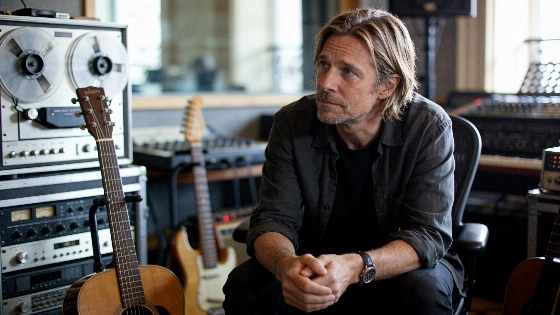
After seven years, Beck returns with Ride Lonesome, recorded in Paris. The album brings back his melancholic sound and looks at how the nineties music scene treated vulnerability. Beck reflects on his career and shifting attitudes.
Beck Hansen’s new album, Ride Lonesome, arrives with a clear memory of how the music world once treated vulnerability. Now 56, Beck remembers the nineties as a time when playing a ballad could get you heckled—or worse. He recalls bottles thrown from the crowd, sometimes filled with urine, just for showing emotion on stage. Back then, the scene was thick with bravado, and few artists risked letting their guard down.
Ride Lonesome is Beck’s first album of new songs in seven years. He’s back with producer Nigel Godrich and longtime collaborators, returning to the organic, melancholic sound that shaped Sea Change. This isn’t just a nostalgic move. The album looks at how time changes people, how identity shifts, and what it costs to be honest in a culture that once demanded toughness. The Guardian notes this is Beck’s fifteenth studio album, set for release on Capitol Records on September 18, 2026. It’s his first full-length album of original material since 2019’s Hyperspace.
In January 2026, Beck also released a rarities and covers collection titled Everybody’s Gotta Learn Sometime, making Ride Lonesome his second major release of the year.
Beck’s career has always been hard to pin down. He came up in New York’s alternative scene in the nineties and broke through with Loser in 1994. Since then, he’s moved through antifolk, lo-fi, and experimental pop, with albums like Odelay, Mutations, and Midnite Vultures showing his restless approach. Sea Change in 2002 revealed a quieter, more introspective side—a mood that Ride Lonesome returns to, but with more restraint. In a recent New York Times interview, Beck said his work with Godrich on this album was meant to echo the intimate, melancholic feel of both Sea Change and Morning Phase.
The new songs dwell on solitude, loss, and heartbreak, but from the perspective of someone who’s lived through it. Beck says the nineties made it hard for artists to show vulnerability without backlash. His music, he explains, has always reflected his own life and the world around him, catching moments of change and uncertainty. Reviews in NME and elsewhere point out that the directness of Ride Lonesome is shaped by Beck’s personal experiences, especially his divorce from Marissa Ribisi, which colors the album’s tone and lyrics.
These days, Beck is more interested in zen Buddhism and acceptance than in keeping up a tough front. He talks about wanting to be more generous, a shift from the defensive stance he once took on stage. This change runs through Ride Lonesome, which looks back at the past but also points forward.
A North American tour in support of Ride Lonesome was announced, with the initial start date set for September 22, 2026. However, several opening shows, including those in Vancouver and Seattle, were postponed due to production issues, as reported by Exclaim! and other outlets.
As Álex Vicente wrote in Babelia, Beck’s return isn’t just about nostalgia. It’s a pointed look at how much has changed—and how much hasn’t—in the music industry’s ideas about masculinity and emotion. Debuting the album in Paris, Beck signals a new willingness to question old habits and face the messiness of adulthood. In a world still echoing with the attitudes of the nineties, Ride Lonesome is a reminder that real growth takes both courage and vulnerability.