Begoña Gómez has recovered her passport after a Madrid court lifted restrictions. The judge permitted her legal representative to collect the document. The case had sparked criticism over the severity of the initial measures.
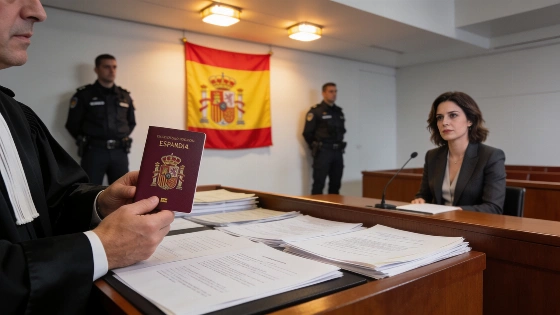
Begoña Gómez, wife of Prime Minister Pedro Sánchez, has regained possession of her passport following a decision by the Madrid Provincial Court to lift all precautionary measures previously imposed by Judge Juan Carlos Peinado. The judge, who had initially required both Gómez and her assistant to appear in person to retrieve their documents, ultimately authorized Gómez’s legal representative to collect the passport on her behalf, according to sources close to the family.
The return of the passport comes after the defense for Cristina Álvarez, Gómez’s assistant, raised concerns that Judge Peinado was effectively withholding the documents by insisting on personal collection at the court. This procedural hurdle was removed after the Provincial Court intervened, instructing the judge to eliminate all restrictions, including the travel ban and the obligation for regular court appearances, citing a lack of flight risk.
Earlier, the court had supported the continuation of the case against Gómez, who faces allegations of influence peddling and embezzlement, but found the strict measures imposed by Peinado unjustified. The restrictions had prevented Gómez from accompanying her husband to the NATO summit in Ankara this July, a move that drew sharp criticism from both the PSOE and government officials. The judge’s justification, which included claims that Gómez’s police escorts could facilitate an escape, was widely condemned as excessive and lacking in legal basis.
The controversy over the handling of the case echoes broader scrutiny of judicial actions involving political figures. In a related development, scrutiny of internal authorizations at PSOE headquarters has intensified, as highlighted in a recent report on unusual approvals for party staff expenses and access. Both cases have fueled debate over the proportionality and transparency of judicial measures in politically sensitive investigations.
For context, the Spanish legal system allows judges to impose precautionary measures such as passport withdrawal and travel bans in cases where there is a perceived risk of flight or interference with the investigation. However, such measures must be justified and proportionate to the circumstances. The Provincial Court’s intervention in Gómez’s case underscores the importance of judicial oversight and the need to balance investigative needs with individual rights. The outcome may influence future handling of high-profile cases involving public figures, especially where political tensions are high and public scrutiny is intense.