More than seventy Belgian towns shut out cars for the annual 'Domingo sin coches'. With Wallonia joining in, residents got a rare look at city life without traffic.
Over seventy towns across Belgium closed their streets to cars this Sunday. It was the biggest 'Domingo sin coches' the country has seen. For the first time, the event reached into Wallonia. City centers and neighborhoods turned into open spaces for people, not vehicles.
Organizers say this jump in numbers is no accident. Els Van den Broeck, director of Mobiel 21, called the day a chance for people to "experience immediately how much safer, fresher and healthier a street without traffic is," and to picture a future where this is normal, not rare. According to Brussels Times, this year broke the old record of 53 towns, thanks in large part to 22 Walloon communes joining in.
The entire Brussels-Capital Region was officially closed to motorized traffic on September 20, 2026, from 9:30 to 19:00, with exceptions only for taxis, buses, emergency services, police, and special permit holders.
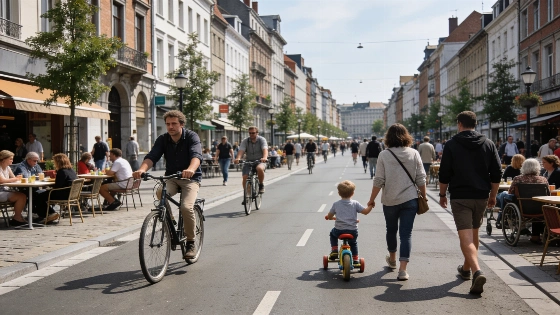
All day, most cars were kept out of the participating towns. Only public transport, taxis, and emergency vehicles could get through. Each town set its own hours, but the change was clear. Streets usually packed with cars and exhaust filled up with markets, performances, and families walking or riding bikes. VRT NWS reported that more towns are joining each year, showing how the event has become part of Belgian civic life.
For many, the change was real, not just a symbol. Elena, a young Spaniard living in Brussels, said she felt a "sense of freedom" as she biked on roads usually closed to her. She saw neighbors bringing tables outside, friends and families out walking, and food stalls and second-hand markets drawing crowds of all ages.
This year smashed the old record of 53 towns. Wallonia's involvement, as part of European Mobility Week, made the difference. Local media confirmed that more than seventy towns took part. The turnout shows more people want to rethink how cities use their streets and public spaces.
Walloon municipalities scheduled their own car-free days as part of Mobility Week 2026, with some holding events on September 19, 20, or 27, rather than on a single unified date.
Van den Broeck pointed out that more towns—especially in Wallonia—are putting money and effort into the event. 'Domingo sin coches' is now a regular part of life across Belgium. The event fits with bigger European trends, like the rise of alternative transport and new ways of using city space, as seen recently in Spain's Aragón region.
Belgium's record turnout this year shows people want to take back their streets, even if just for a day. The success of 'Domingo sin coches' points to a growing push for safer, healthier, and more social city life. As more towns join in, the event is no longer a novelty. It's a sign that Belgians—and maybe other Europeans—are rethinking what their cities could be.