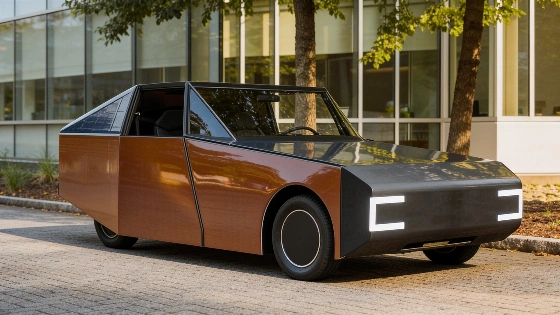
A team of Clemson University students, backed by BMW, has developed the Deep Orange 17—a lightweight, solar-powered coupé that produces more energy than it consumes. The project redefines what’s possible for sustainable mobility.
BMW set an ambitious challenge for engineering students at Clemson University: create a car that could generate more energy than it uses in daily life. Two years later, the result is the Deep Orange 17—a two-door coupé that stands out for both its unconventional appearance and its radical approach to efficiency.
The project began as a test of whether a vehicle could achieve a positive energy balance, meaning it would produce more power than it consumes during regular use. The Clemson team, working closely with BMW engineers, focused on integrating solar technology directly into the car’s structure. The exterior is covered with over 1,700 photovoltaic cells, allowing the car to harvest solar energy not only while parked but also on the move.
Weighing just 550 kilograms, the Deep Orange 17 is built for minimalism. Its design deliberately sacrifices some aerodynamic features to reduce weight and maximize energy gains. Inside, the car blends retro and modern elements, featuring a digital display for the driver and support for Apple CarPlay and Android Auto. The result is a vehicle that looks unlike anything else on the road—an intentional choice to prioritize function over form.
BMW’s project manager for research and new technologies, Stephan Augustin, praised the students’ achievement, noting the technical hurdles they overcame to deliver a working prototype with a positive energy balance. Student team member Harsh Manghnani described the process as “incredibly challenging,” highlighting the importance of demonstrating how solar integration can make vehicles more energy-independent.
The Deep Orange 17’s approach is rooted in a simple observation: most cars spend much of their time parked, exposed to sunlight. By capturing this otherwise wasted energy, the car can recharge itself throughout the day. This concept pushes the boundaries of what’s possible for electric vehicles, especially as the industry searches for ways to extend range and reduce reliance on charging infrastructure.
While the Deep Orange 17’s looks have sparked debate, its technical achievement is clear. The project signals a new direction for sustainable mobility, where efficiency and energy autonomy take precedence over traditional aesthetics. As the automotive sector evolves, features like solar integration could become as desirable as comfort options—much like how heated seats have recently topped the wish lists of new car buyers in the US.
For now, the Deep Orange 17 remains a prototype, but its success may inspire other manufacturers to experiment with similar concepts. The collaboration between BMW and Clemson University demonstrates how academic innovation can drive the industry forward, offering a glimpse of what the future of energy-positive vehicles might look like.
Contextually, solar-powered vehicles have long been a research focus, but few have achieved practical, real-world application. The Deep Orange 17’s lightweight construction and integrated technology set it apart, suggesting that with continued development, energy-generating cars could move from experimental projects to everyday reality.