Two businessmen at the center of the Koldo case have denied any role in illegal commissions or contracts for pandemic medical supplies. Their statements come as the investigation wraps up, with the court weighing their defense against the evidence.
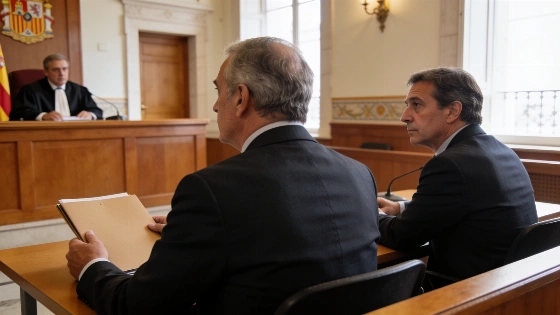
As the National Court moves toward the end of the Koldo case, two businessmen—Juan Carlos Cueto and Íñigo Rotaeche—have tried to distance themselves from the scandal. Both men, under investigation, appeared before Judge Ismael Moreno and denied any part in the irregular commissions or illegal contracts that marked Spain’s pandemic procurement. According to Spanish news agencies, their testimony on September 11, 2026, included clear denials of bribery, involvement in any scheme, or knowledge of Aldama’s connections with former minister Ábalos.
The prosecution’s case centers on Víctor de Aldama, an intermediary already convicted for arranging lucrative pandemic supply deals. The Supreme Court previously found that Aldama paid illegal commissions to José Luis Ábalos, then Minister of Transport, and his advisor Koldo García. Aldama’s prison sentence was suspended, but Ábalos and García received jail terms, confirming a corrupt network at high levels. The investigation also points to Soluciones de Gestión y Apoyo a Empresas SL, with Rotaeche as its administrator and Cueto as the main figure behind the company’s mask supply contracts.
The disputed contract for eight million masks was signed several days before the official government order, a timing prosecutors argue is evidence of insider knowledge and collusion.
Cueto and Rotaeche maintain they were not involved in Aldama’s activities. Rotaeche, who led Soluciones de Gestión, answered questions for over an hour, insisting all agreements were legal. Cueto, who financed the purchase of medical supplies later sold to the government, gave a similar account. Both said they knew nothing of bribes, illegal contracts, or Aldama’s dealings with Ábalos. Their defense, as reported by Spanish legal correspondents, is that the contract date was a clerical error. They claim it should have been March 19, 2020, not March 16—a key point, since the prosecution’s argument of insider knowledge depends on this date.
Prosecutors focused on the timing. Four days before the government’s official order for eight million masks, Soluciones de Gestión and Cueto’s group had already signed a contract to supply that exact amount. The Supreme Court previously ruled this timing as evidence of insider knowledge and collusion. In response, the accused said the contract was misdated and plan to submit expert analysis to support this claim. According to major Spanish outlets, the defense is preparing technical documents to show it was an administrative mistake.
The investigation remains open for those not tried in the Supreme Court, and the outcome could influence how Spain handles future procurement scandals. The defense relies on technical details, while the prosecution points to a pattern of evidence already upheld by the courts. This case unfolds as Spain continues to deal with the fallout from pandemic-era contracts, echoing concerns about delays and public trust in the justice system, as seen in other recent corruption cases.
Recent reports indicate that the Audiencia Nacional is also investigating a separate episode involving a fictitious €15 million contract and its possible connection to PSOE financing, broadening the political context of the Koldo case.
In the end, those directly involved claim ignorance, while the broader corruption has already been proven elsewhere. The defense’s focus on administrative errors and lack of direct evidence may delay the process, but does little to restore confidence in public procurement. As the court considers these final testimonies, the question is whether Spain’s legal system can hold all responsible parties to account. The Koldo case highlights the weaknesses in oversight when political connections and emergency powers overlap. Until the courts show that no one is beyond reach, the issue of pandemic profiteering will continue to cast a shadow over Spain’s institutions.