BYD is rolling out 300 ultra-fast 1500 kW charging stations across Spain by 2026, promising to deliver 400 km of range in just five minutes. The move signals a new phase in electric mobility, but most current EVs cannot yet take full advantage.
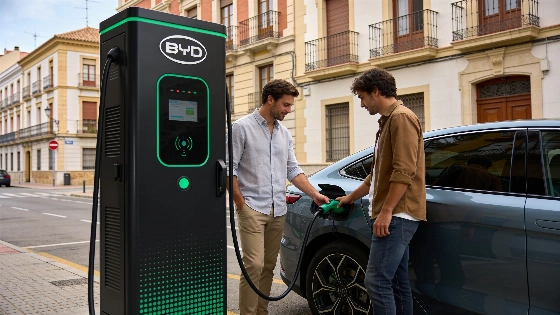
Spain is about to see a new kind of EV charger. BYD plans to install 300 ultra-fast 1500 kW charging stations by 2026. The company says these chargers can add 400 kilometers of range in just five minutes. Right now, almost no electric car in Spain—including BYD’s own main models—can actually use that much power.
How does it work? BYD’s Flash Charging stations use built-in battery packs. These packs slowly pull 100 kW from the grid. When a car plugs in, the charger releases up to 1500 kW in a short burst. This setup avoids overloading the local grid. It stores energy ahead of time, then delivers it all at once. That changes the game for fast charging. According to leading EV industry publications, the first pilot in Leganés (Madrid) showed the Denza Z9 GT charging from 10% to 97% in under nine minutes. That proves BYD’s megawatt charging tech works in real life.
As of mid-2024, eight BYD 1500 kW charging stations are physically ready in Spain, but their launch is delayed by complex permitting processes.
But there’s a catch. Only the Denza Z9 GT—BYD’s €115,000 flagship—can use the full speed. Most electric cars in Spain are limited to 400 kW or less. Even BYD’s cheaper models can’t take full advantage yet. Alberto de Aza, BYD’s general manager for Spain and Portugal, says only future models with the new Blade 2.0 battery and better cooling will reach these speeds. The first of these cars should arrive early next year. Reuters and other analysts confirm that, for now, only specially prepared vehicles can use the full 1500 kW. More models will catch up over the next two years.
For drivers, five-minute charging sounds great. But it depends on how fast carmakers upgrade their vehicles. Until then, most EV owners will see only small gains in charging speed. The big leap is still out of reach. BYD says charging at these stations will cost less than 0.50 euros per kWh. Actual prices may change depending on the operator and how drivers access the chargers, according to several independent sources.
BYD’s plans go further than just chargers. The company is looking at Spain for its next European factory. No final decision yet. Its first plant in Szeged, Hungary, is already delayed. Now BYD wants to buy existing factories in southern Europe instead of building new ones. That could speed up expansion. The much-talked-about Almussafes plant is off the table. Still, Spain is a top contender. De Aza calls Spain “the first ambassador” for BYD’s European manufacturing push.
BYD has expanded its Iberian network plan to 350 stations—300 in Spain and 50 in Portugal—by the end of 2027, reflecting a broader European strategy that includes both charging infrastructure and local production. The company is also evaluating the purchase of existing sites in Spain and France for its second European factory, according to Reuters and other industry reports.
The scale is big. BYD wants eight 1500 kW chargers in Spain by the end of 2026. The full plan is 300 in Spain and 50 in Portugal. Across Europe, BYD aims for 3,000 stations in the same period. That’s far more than what rivals are building now. It’s a direct challenge to the big names in charging.
Battery reliability is still a worry for Spanish drivers. Recent reports of Tesla Model Y taxis breaking down have left some owners stranded for months. That shows how much is at stake as the industry tries to improve both charging speed and battery life.
BYD’s Flash Charging stations, first shown in Paris with the Denza Z9 GT, use a 1000-volt system and can deliver up to 1500 amperes. That pushes current cable tech to its limits. In China, these chargers use two connectors under the GB/T standard to reach 1500 kW. In Europe, the CCS2 connector is standard. Right now, only the Denza Z9 GT can take the full charge. Other cars will have to wait for upgrades.
Spain and France are both in the running for BYD’s next factory. The company’s goal is clear. It wants to lead not just in car sales, but in charging and battery tech too. The next year will show if Spanish drivers get true five-minute charging first—or if the chargers will outpace the cars. For now, BYD’s move is forcing the whole sector to speed up. Spain is right in the middle of this race.