Richard Carapaz claimed a solo win on the iconic Alpe d'Huez after a punishing Alpine stage. Tadej Pogacar focused on helping Isaac del Toro secure a podium finish. The day saw crashes, bold attacks, and a reshuffling of the Tour's top spots.
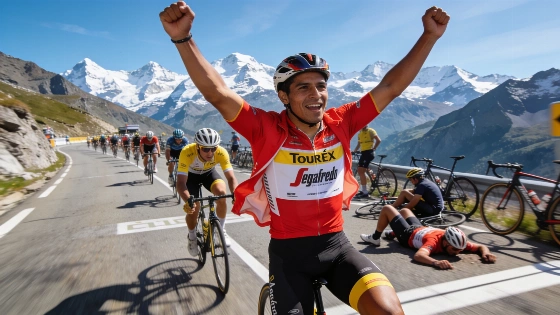
Richard Carapaz delivered a commanding solo victory on the legendary Alpe d'Huez, conquering the queen stage of the Tour de France after a relentless battle through the Alps. The Ecuadorian rider, already a stage winner this year, capitalized on a dramatic crash involving Sepp Kuss to secure his second triumph and cement his hold on the mountains classification. The stage, stretching from Le Bourg d'Oisans to Alpe d'Huez, was marked by extreme elevation and constant attacks, testing the limits of every contender.
While Carapaz surged ahead, the spotlight also turned to Tadej Pogacar, who shifted his focus from personal glory to supporting his teammate Isaac del Toro. Instead of chasing another stage win, Pogacar worked to ensure Del Toro's place on the podium, a move that underscored the team-first approach on a day when individual ambitions often dominate. This tactical decision proved decisive, as Del Toro held off rivals including Paul Seixas, who finished nearly three minutes behind, and Juan Ayuso, who had launched a bold early attack but ultimately slipped to seventh overall.
The stage itself was a punishing test, described by race director Christian Prudhomme as "the hardest in history." Riders faced 5,450 meters of accumulated elevation, climbing iconic passes such as the Croix de Fer, Col du Telegraphe, Galibier, and the rarely used Col de Sarenne before the final ascent to Alpe d'Huez. The relentless pace and challenging terrain led to a series of breakaways and tactical shifts, with Ayuso animating the early moves and Mads Pedersen securing the points classification after another strong performance.
Sepp Kuss, a key mountain domestique for Visma, appeared poised for a breakthrough win until a harrowing crash on the descent from Sarenne dashed his hopes. Despite two falls, including one that nearly sent him off the road, Kuss managed to finish but was visibly battered. Carapaz, meanwhile, maintained his composure and strength, attacking decisively to distance his remaining rivals and cross the line alone for a memorable victory.
As the peloton reeled in the breakaway, Pogacar took on the responsibility of pacing Del Toro, closing down gaps and neutralizing late attacks from Remco Evenepoel. The leader's decision to prioritize his teammate's podium over personal accolades was a notable contrast to his aggressive ride on the previous stage, as highlighted in recent coverage of Pogacar's Alpe d'Huez exploits.
The outcome of Stage 20 reshaped the general classification and reinforced the unpredictable nature of this year's Tour. Carapaz's double stage wins and mountains jersey underline his resurgence, while Pogacar's leadership and Del Toro's breakthrough podium finish add new dimensions to the race narrative. The grueling Alpine parcours, with its historic climbs and dramatic incidents, will be remembered as a defining moment of the 2026 edition.
For context, the Alpe d'Huez has long been a decisive battleground in the Tour de France, often determining the final podium. The inclusion of the Col de Sarenne this year added a new layer of difficulty, rarely seen in previous editions. The combination of high altitude, technical descents, and tactical alliances shaped a stage that tested both physical endurance and strategic acumen. As the Tour approaches its conclusion, the performances on Stage 20 will likely influence team strategies and rider ambitions for seasons to come.