A major green ammonia plant in Castellón has sparked strong opposition from local groups. Critics warn of safety risks and environmental impact, while all production is set for export. Authorities are now under pressure to respond.
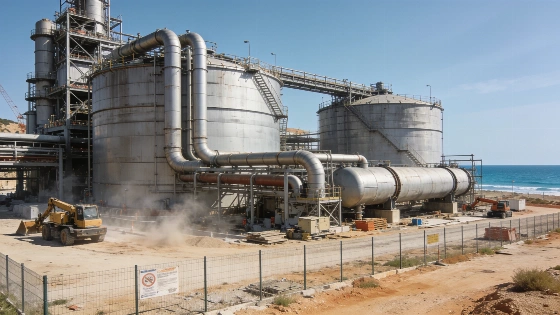
Plans for a large-scale green ammonia plant in the industrial zone of El Serrallo, between Almassora and the Grau de Castellón, have triggered a wave of resistance from local residents, environmental groups, and political parties. The project, led by Armonia Green Castellón, SL—a subsidiary of the Spanish group Ignis, recently partnered with the US-based KKR fund—aims to produce over 500,000 tonnes of green ammonia annually for export. However, the initiative has become a flashpoint due to its scale, potential safety hazards, and lack of direct benefits for the local industry.
The opposition, organized under the platform No Armonia Green, is racing to submit technical objections to the regional Ministry of Environment before the July 13 deadline. Compromís, a regional political party, has also pushed for the Almassora council to formally oppose the plant. According to company data, the facility would occupy 200,000 square meters and require an investment of €1.656 billion, with production scheduled from 2025 to 2033. Despite repeated requests, Ignis has not responded to media inquiries.
Supporters of the project argue it would position Castellón as an international energy hub and reduce CO2 emissions by 1.2 million tonnes. Detractors, however, see it as a business venture that exposes the region to the risks of handling a highly toxic substance, while all ammonia produced would be shipped to northern Europe. Local industries, especially the ceramics sector, would not benefit from the ammonia, which is produced using renewable hydrogen and is essential for their own decarbonization efforts.
Technical reports from local authorities have added weight to the concerns. The Almassora council has called for continuous monitoring of noise and odors, citing the cumulative impact in an already dense industrial area. The Castellón city council has highlighted the risk of a 'domino effect'—where an incident at one facility could trigger a chain reaction across the industrial zone, which already houses high-risk installations like the BP refinery and chemical plants. The planned plant would also take up more than 30% of land previously reserved for a strategic logistics platform, potentially limiting future development.
Environmental groups stress that their opposition is not against ammonia production or decarbonization itself, but against the scale and location of this particular project. They point to the dangers posed by two massive storage tanks, each with a combined capacity of 56,000 tonnes of ammonia. In the event of a major accident, a toxic cloud could threaten urban areas within a four-kilometer radius. Critics also note that safety and self-protection plans have not been made public, and the route for transporting ammonia to the port could put nearby facilities at risk.
Recently, a report from the Generalitat's Agency for Security and Emergencies, dated July 2025, found the company's safety measures insufficient to mitigate the impact of a potential accident. The agency has called for a redesign of the project to include additional protections for the population.
Another major point of contention is that all ammonia produced will be exported, with none supplied to local industries. Environmentalists argue that Castellón will bear the environmental and industrial risks without gaining direct benefits from the energy transition. The project is expected to create only around 100 permanent jobs, raising questions about its social return given the scale of investment.
The plant's 'green' credentials are also under scrutiny. It would require up to 850 megawatts of power—about a quarter of the annual electricity consumption of the entire Valencian Community—and use five million cubic meters of desalinated seawater each year. While the company claims all energy will come from renewable sources, critics argue that, in practice, the plant will sometimes rely on gas-fired power. There are also concerns about the environmental impact of discharging four million cubic meters of brine and industrial wastewater into the port, potentially affecting marine ecosystems and protected areas nearby.
Opponents emphasize that they support renewable energy but call for more sensible planning regarding the size and location of such projects. They cite BP's smaller-scale, locally focused hydrogen project as a more appropriate model. The promoters of the Castellón plant had previously considered other locations, such as Tarragona and Sagunto, but ultimately chose El Serrallo. The current mobilization aims to bring public attention to the risks and consequences of the project, challenging the idea that an environmental label alone justifies large-scale industrial developments in the region.
For context, green ammonia is increasingly seen as a key component in the global push for decarbonization, especially in sectors like shipping and heavy industry. Spain, with its access to renewable energy and strategic ports, is positioning itself as a future exporter of green fuels. However, as the Castellón case shows, local acceptance and integration with existing industries remain critical challenges for such projects.