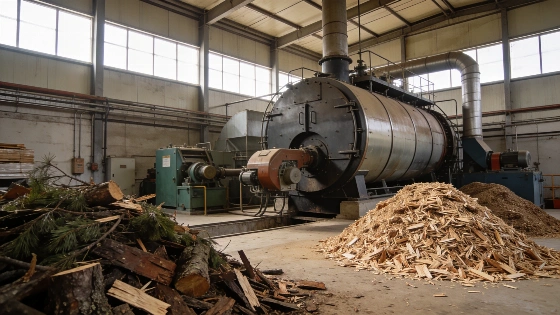
Biomass consumption in Catalonia jumped 19 percent in 2025. Industrial demand is rising fast, but forest cleaning efforts remain far behind. The region faces mounting wildfire risks as underused woodland continues to accumulate.
Factories across Catalonia are turning to biomass energy at a rapid pace, helped by European funding and the need to cut gas costs. But this growth hasn't solved a bigger problem: forests packed with dry undergrowth and deadwood, leaving the region exposed to severe wildfires.
In 2025, Catalonia used 652,500 tonnes of biomass, up 19 percent from the year before. The main driver has been large factories—especially in paper, food packaging, and chemicals—installing biomass boilers to replace gas systems. The Generalitat reports that industrial demand alone rose 57 percent year-on-year, with 4,529 biomass installations now running and a total capacity of 574 megawatts.
According to Spain's Ministry for the Ecological Transition, Catalonia is among the top three Spanish regions in terms of installed biomass capacity, reflecting a national trend toward renewable energy diversification.
Despite the shift to renewables, the underlying risk remains. Forests cover 65 percent of Catalonia, and most of the new growth each year is left untouched. Only a third is removed, while the rest builds up as fuel for fires. In the summer of 2025, there were 314 wildfires, including a major one in les Gavarres that burned 2,400 hectares. Forest engineers warn that without regular cleaning and management, the region is taking big risks with its landscape.
European funds have covered up to 30 percent of the investment for new biomass infrastructure, making it an appealing option for companies looking for stable energy prices and relief from rising gas and carbon costs. The sector now includes 365 companies with a combined turnover of €872 million, according to a study by the Generalitat's Acció agency. But the supply of raw biomass depends on forest management—a sector that is still short on workers and funding.
A 2024 report by the European Environment Agency highlights that Mediterranean regions like Catalonia are experiencing longer and more intense fire seasons, with climate change expected to further increase wildfire frequency and severity in the coming years. The report stresses the need for integrated forest management and rural development policies to address both energy and environmental challenges.
About three-quarters of Catalonia's forests are privately owned, divided among roughly 220,000 landholders. Most owners no longer live off the land, and the sector struggles with an aging workforce and few new entrants. Only about 3,000 people work in forest management, many as freelancers or in small firms. The work is seasonal, tough, and poorly paid, so large areas go untended. Industry leaders say the government needs to invest more to professionalize the sector and attract young workers and migrants, making forest care a viable job and a way to support rural communities.
The new Catalan government under Salvador Illa has made forest management a priority, signing a protocol with the four provincial councils to triple the area of woodland cleaned each year—from 418 to 2,000 hectares. The plan aims to reverse years of neglect, but experts warn that progress will be slow and needs steady, long-term funding. The real question is whether forest cleaning can keep up with the fast-growing demand for biomass, or if Catalonia will end up importing fuel despite having plenty of local resources.
Biomass energy is often described as climate-friendly because it uses local material and is considered carbon neutral. But the environmental benefits depend on how the wood is used: ideally, higher-quality wood goes to durable goods like furniture, and only the lowest-quality material is burned for energy. If forest management falls behind, the risks are not just more wildfires, but also missed chances to create rural jobs and cut dependence on imported fuels. Catalonia's experience shows that energy transition policies need to be matched by investment in the people and systems that keep forests healthy. Without that, the promise of biomass will remain only half fulfilled.